

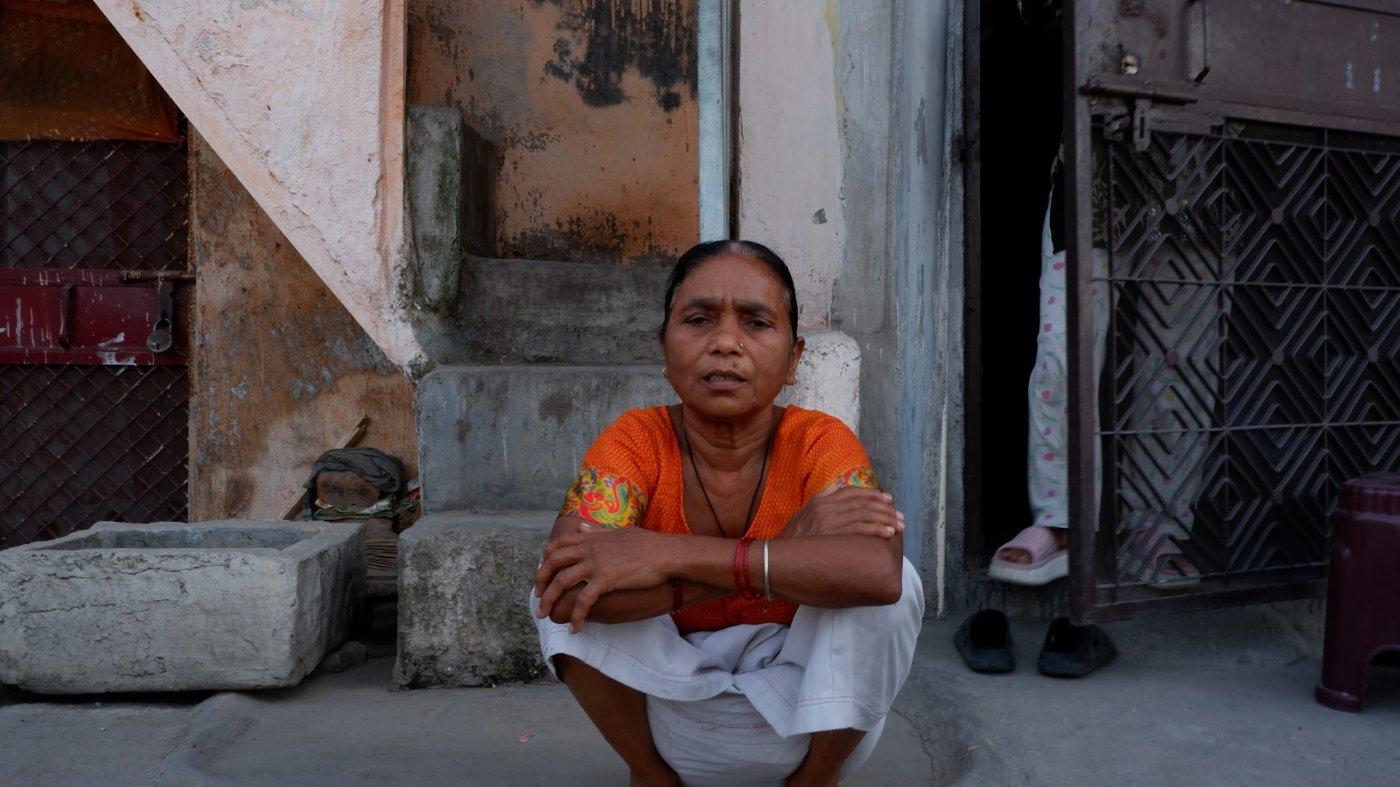
New Delhi: “I’m so scared that I cannot work, I cannot sleep. I will not leave my home and live on rent somewhere else.”
As she spoke, Chandrakala, a 50-year-old domestic worker who goes by a single name, sat outside her house in North Delhi’s Shalimar village.
Houses and shops in Shalimar village— an unassuming cluster of apartment buildings, right across a railway track and named after the adjacent Mughal era Shalimar Bagh—were marked for demolition in January 2026 when residents received government notices labelling the properties “encroachments”, stating that the state had taken over the land in 1980, after giving notice of the acquisition in 1959 and 1961.
The land is part of the right-of-way (RoW) for road number 320 in the 1987 Master Plan of Delhi, according to the notice. RoW refers to an area of land acquired by the government for utilities (such as roads).
On 6 April, the Delhi High Court upheld the demolition order of almost 150 houses and shops in the area, and set an eviction date of 30 May. Officials began demolishing the 143 structures on 31 May after the Supreme Court upheld the Delhi High Court order on 29 May.
Residents questioned the government’s right to take possession of the land more than 45 years after it was acquired.
“I was born here,” said 48-year-old Karan Singh, who had been skipping work to join the sit-in protest in the locality. “My family has been living here for the past five decades. If they evict us, we’ll end up on the streets.”
This story was originally published in article-14.com. Read the full story here.