
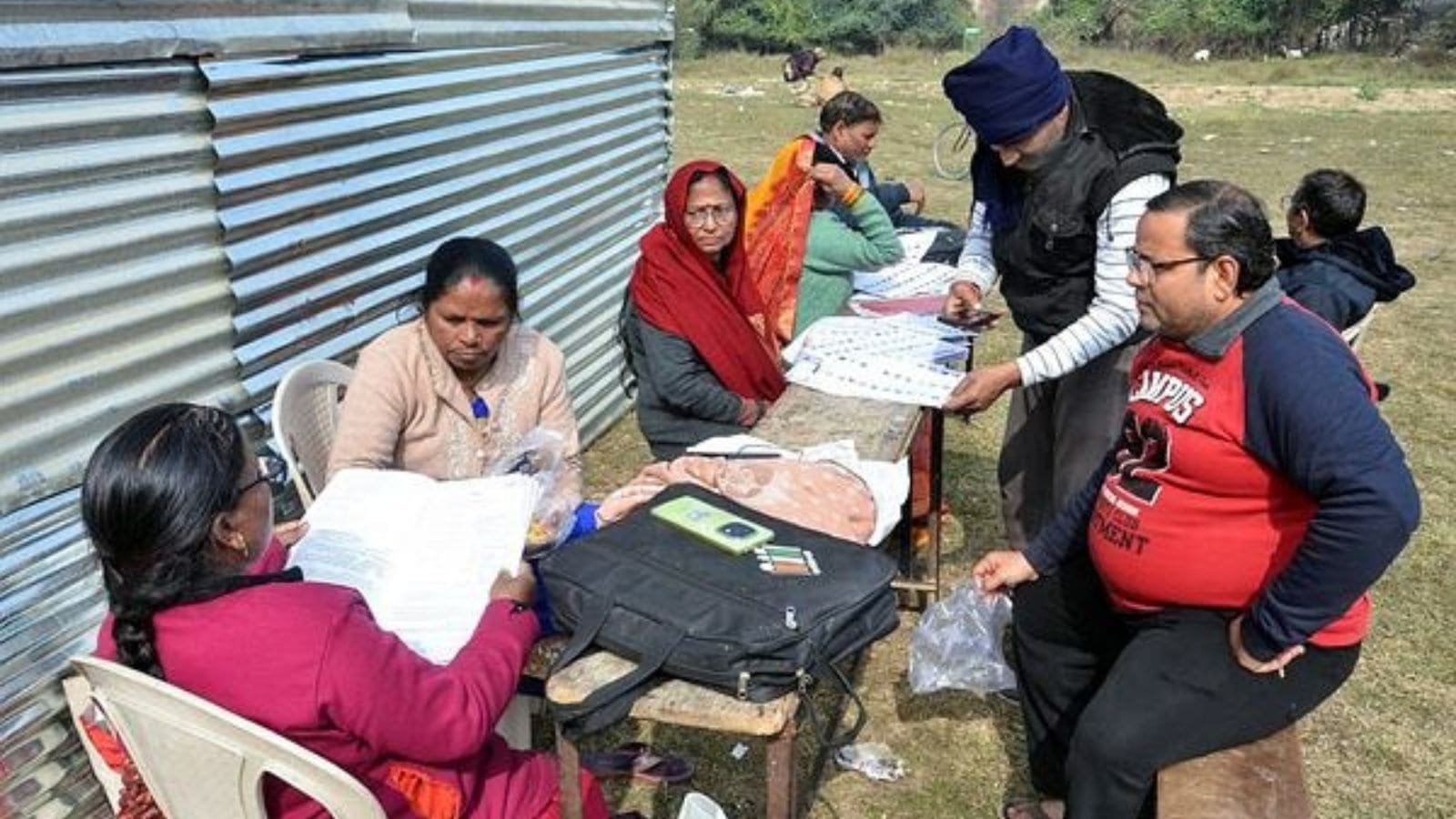
The proportion of voters deleted in the first draft of electoral rolls published after the Special Intensive Revision (SIR) exercise in Uttar Pradesh is uniform across minority-dominated areas and the rest of the state.
While the share of Muslims in the population of Uttar Pradesh is estimated to be around 19.26%, in 10 districts, the community numbers between 33% and 50% of the population. These districts include Rampur (50.57%), Moradabad (47.12%), Bijnor (43%), Saharanpur (41.95%), Muzaffarnagar (41.3%), Amroha (40.78%), Balrampur (37.51%), Bareilly 34.54%, Meerut (34.43%), and Bahraich (33.53%).
In the 13 states (including Bihar) and Union territories where the SIR has been conducted so far, Uttar Pradesh has seen the highest deletions among states. The Election Commission has said the number of deletions are mainly due to voters being marked as deceased, shifted, absent or enrolled at multiple places, and the number of deletions are expected to fall in the complaints and redressal stages.
Balrampur, which borders Nepal, is third among the 10 districts with high population of Muslims in terms of deletions. The EC said voters’ names were deleted in the first rolls here largely because their enumeration forms remained “uncollected”. Of them, 10% are in the category of absent/untraceable, and 8.43% in the permanently shifted category.
There were 15.83 lakh names in the electoral rolls of Balrampur district before the start of the SIR exercise. In the first draft after the SIR, 25.98% names have been deleted, leaving 11.71 lakh names in the voter list.
This story was originally published in indianexpress.com. Read the full story here.