
by Tanya Arora
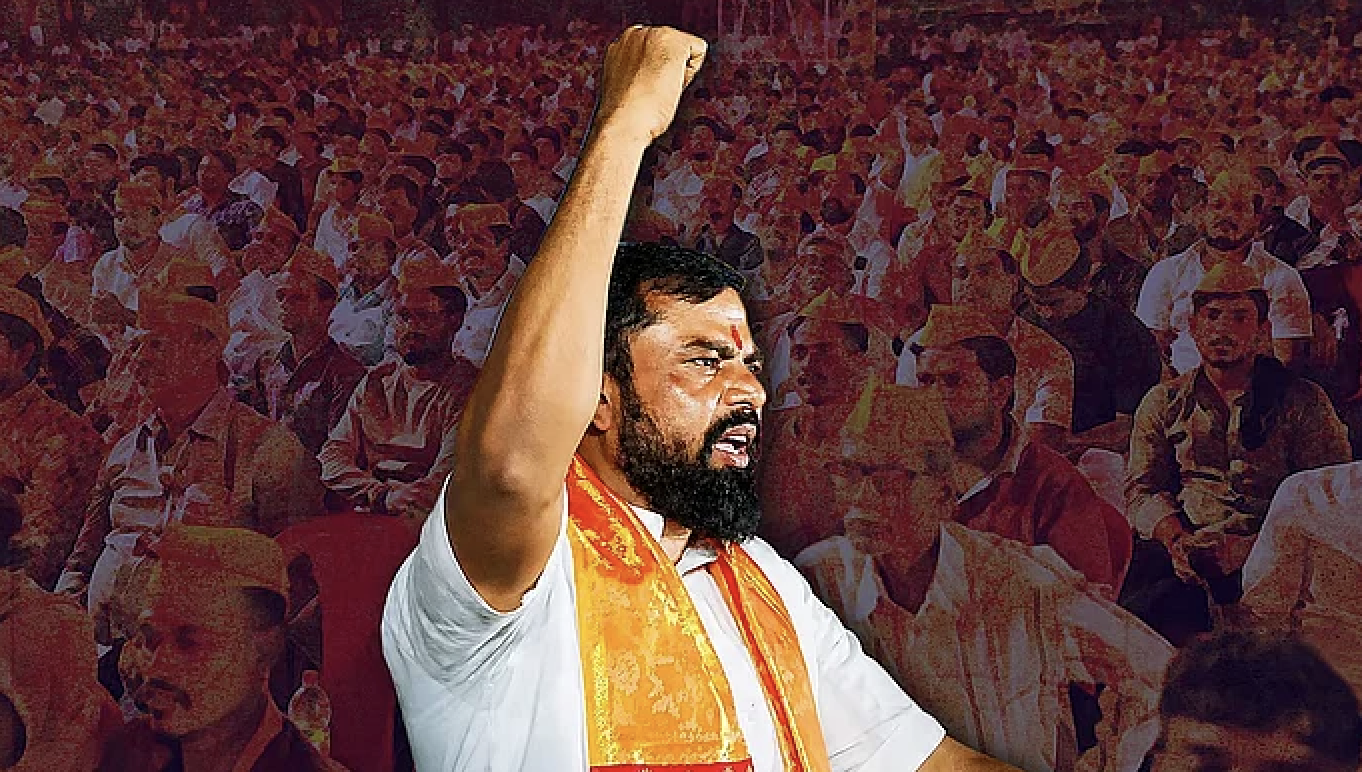
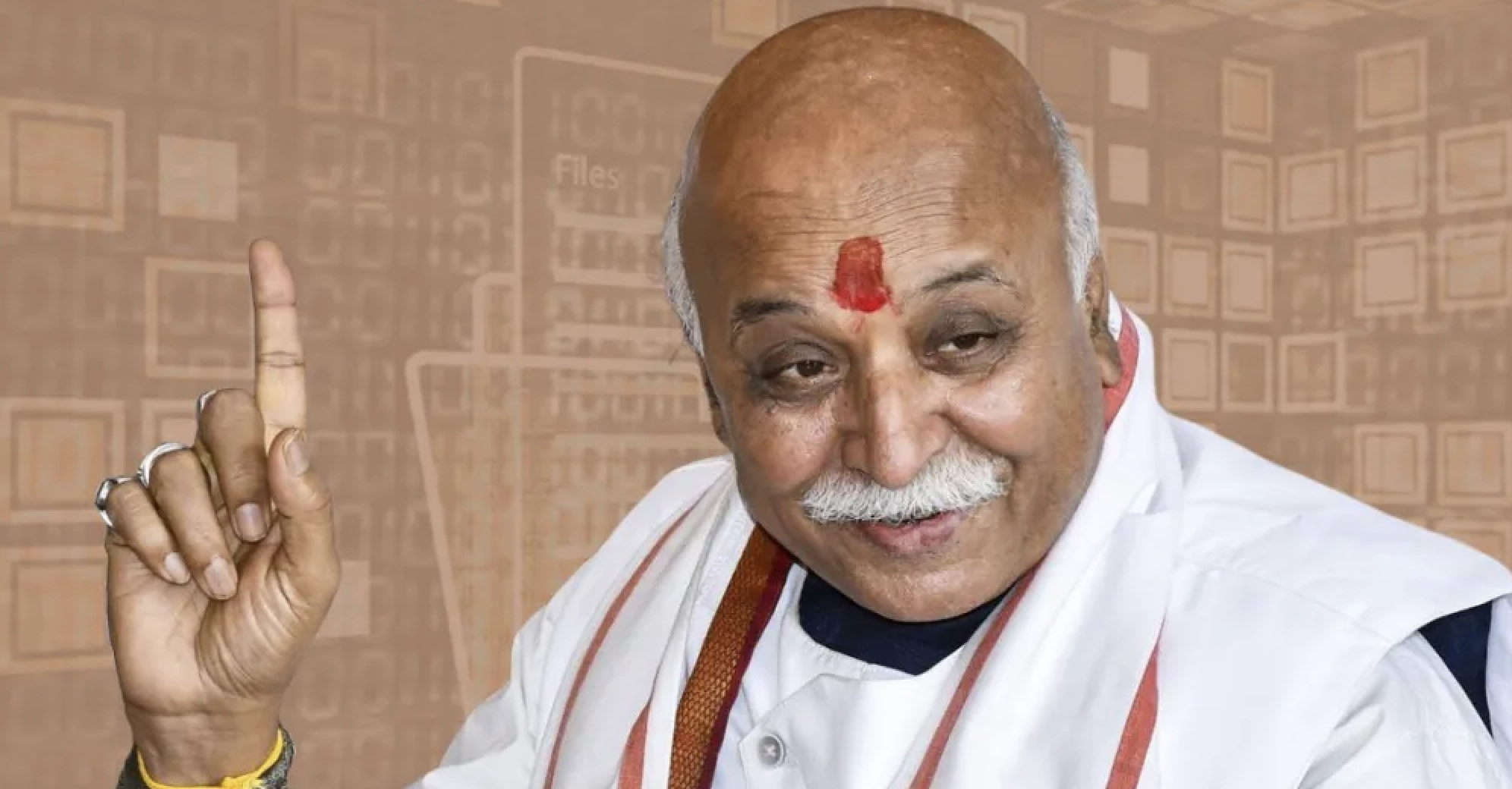
Over the past six months, across small-town maidans, temple courtyards, community halls, industrial clusters, and makeshift stages stretching from Uttar Pradesh to Gujarat, Assam to Maharashtra, a parallel political vocabulary has been unfolding—one that does not merely confront India’s constitutional imagination but seeks to overwrite it. At hundreds of events organised by the Praveen Togadia–led Antarrashtriya Hindu Parishad (AHP) and its youth wing, the Rashtriya Bajrang Dal (RBD), an alternative moral order was being scripted in real time: a world in which demographic suspicion becomes civic virtue, weapons become sacralised instruments of community defence, masculinity becomes the measure of citizenship, and minorities—especially Muslims and Christians—are recast as civilisational threats rather than equal members of the Republic. What emerges from this dataset is not a scattered chronicle of hate speech. It is a window into the systematic construction of a networked, organised architecture of majoritarian power—an apparatus that operates in the shadow of the state, thrives on institutional abdication, and gradually normalises a vigilante sovereignty that rivals the authority of the Constitution itself. The mysterious and rather inexplicable shift of Pravin Togadia from his decades’ long association with the original Vishwa Hindu Parishad (VHP) and Bajrang Dal (BD) also bears investigation!
While India has long witnessed episodic flashes of communal hostility or sporadic acts of vigilantism, the six-month period under study stands apart for its density, coordination, and geographic spread. Under Togadia’s polarising leadership, AHP and RBD conducted dozens of public rallies, Shastra Puja ceremonies, trishul and weapon distribution events, ideological training camps, anti-conversion protests, disruptions of minority religious gatherings, and direct interventions into interfaith and community life. The patterns revealed in these events are not incidental expressions of bigotry but components of a carefully structured ideological project that merges theology, masculinity, ritual, and violence into a coherent organisational strategy.
The socio-legal significance of this mobilisation lies not only in the content of the speeches or the frequency of the gatherings but in the formation of a parallel normative order—a majoritarian apparatus that increasingly shapes public life, community relations, and the distribution of violence. AHP–RBD’s activities represent the consolidation of what may be termed an infrastructural form of vigilante sovereignty. In this system, communal identity becomes the organising principle of public order; violence is reimagined as moral duty; masculinity becomes a civic ideal; and the state’s authority is supplemented—or overridden—by militant religiosity. This is not a spontaneous phenomenon. It is patterned, scripted, routinised, and embedded in organisational structures that grant it continuity, reproducibility, and diffusion.
This article examines the six-month mobilisation through a socio-legal lens, drawing from an extensive dataset of AHP–RBD events across multiple states (see attached document for a comprehensive list). By tracing thematic narratives, analysing rhetorical patterns, studying ritual practices, and observing the organisation’s interactions with state institutions—particularly the police—we demonstrate how AHP–RBD’s activities signal a dangerous reconfiguration of India’s democratic order. The mobilisation reveals the emergence of a dual authority structure: the formal, constitutional state that guarantees equality, liberty, and religious freedom, a constitutional order that is being hollowed out; and a parallel, extra-legal majoritarian sovereignty that polices interfaith intimacy, adjudicates religious legitimacy, regulates gender and sexuality, and authorises violence in the name of community protection.
This story was originally published in cjp.org.in. Read the full story here.