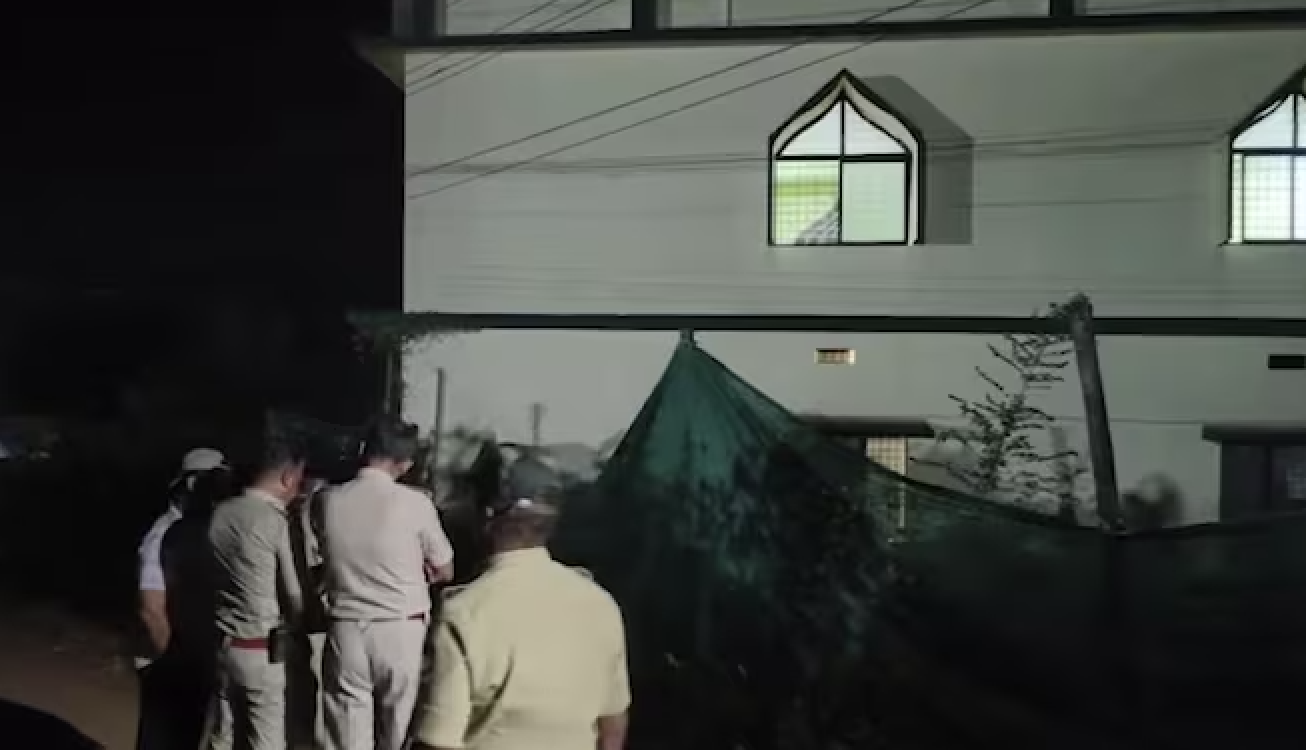

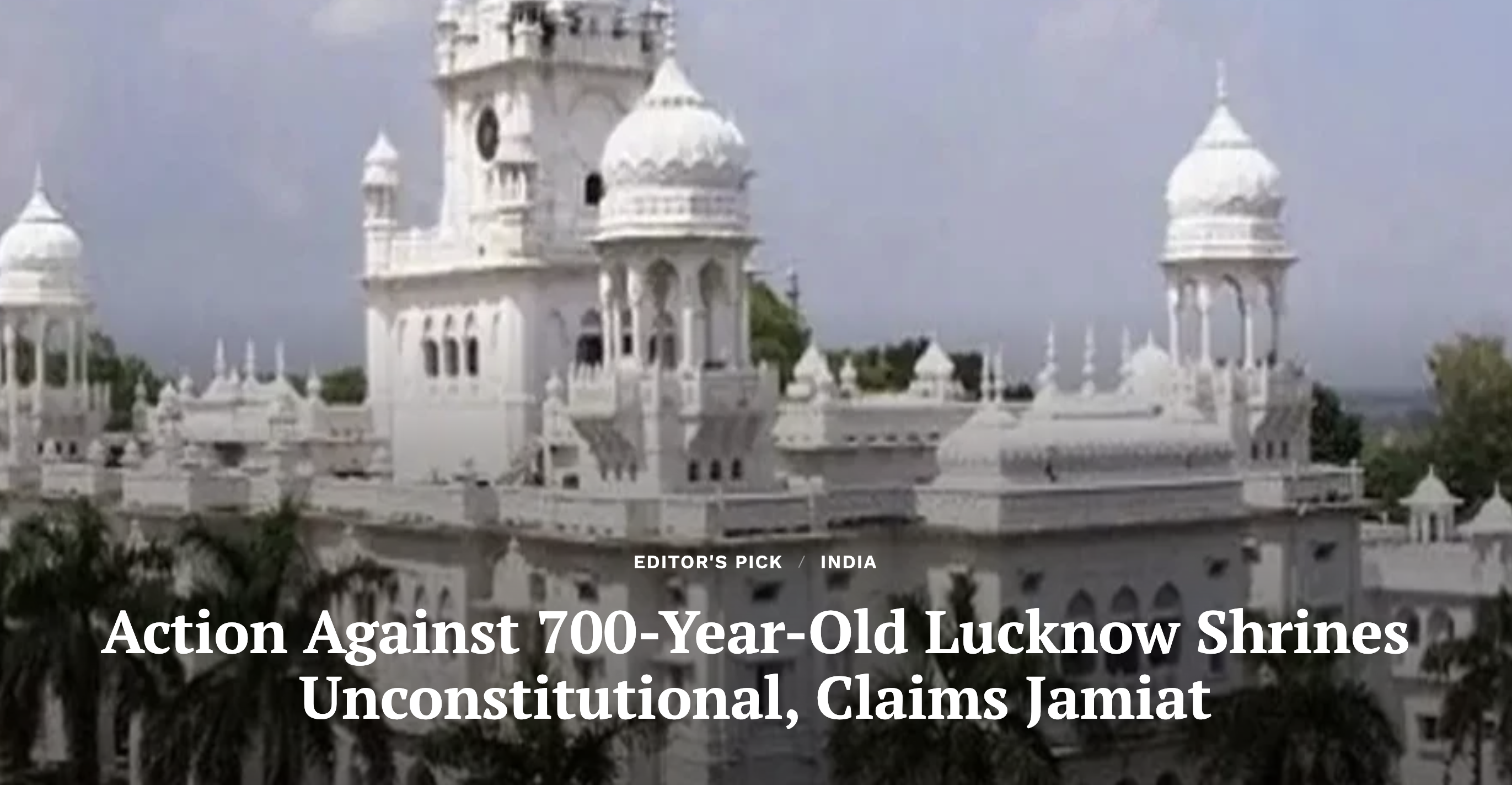
NEW DELHI – Amid a growing pattern of action against mosques, shrines and other religious places belonging to minority communities across several BJP-ruled states, the Jamiat Ulama-i-Hind (Mahmood Madani faction) on Wednesday expressed grave concern over the vandalism and demolition notices issued against centuries-old shrines located adjacent to King George’s Medical University (KGMU) in Lucknow.
The organisation described the move as part of a wider, disturbing trend of targeting Muslim religious heritage under alleged state patronage and communal pressure.
Jamiat chief Maulana Mahmood Madani strongly condemned the recent vandalism inside the shrine of Hazrat Haji Harmain Shah and the subsequent issuance of demolition notices to shrines situated within the precincts of Hazrat Makhdoom Shah Meena. He warned the KGMU administration against violating constitutional guarantees and laws governing waqf properties “under the cover of misleading propaganda” and demanded immediate withdrawal of all demolition notices.
“These shrines are not encroachments. They are part of India’s historical and religious landscape, predating the medical college itself by centuries,” Maulana Madani said in a statement. He pointed out that the shrines adjoining KGMU are over 700 years old, while King George’s Medical College was established only in 1912 during the colonial period.
Refuting media narratives questioning the presence of multiple shrines “within a college campus”, Madani said such claims were factually incorrect and deliberately communal in nature. At the time of the college’s establishment, he noted, the Revenue Department had clearly demarcated the shrine land separately from the college campus, giving it an independent and permanent legal status. “To now suggest otherwise is not only misleading but also aimed at justifying unlawful actions,” he said.
The Jamiat chief also highlighted the demolition carried out on April 26, 2025, under the supervision of Professor Dr KK Singh, which included the destruction of the ablution area (wuzu khana), prayer space and facilities meant for devotees within the boundaries of the shrine of Hazrat Haji Harmain Shah. According to Madani, the action was taken without any court order, approval from the Waqf Board, or consent of the mutawalli (caretaker).
“This was a unilateral and illegal act,” he said, adding that the demolition appeared to have been carried out in an atmosphere vitiated by distorted and sensationalised media narratives rather than through any lawful administrative process.
Emphasising the legal position, Maulana Madani said the land in question is a duly registered waqf property under the Waqf Act, 1995, and is officially recorded with the UP Sunni Waqf Board. Under the law, he stressed, all disputes or actions related to waqf properties fall exclusively within the jurisdiction of competent courts. “No university administration, district official or other authority has the power to issue demolition notices or resort to coercive measures in matters concerning waqf land,” he said, calling such actions “patently illegal and unconstitutional”.
This story was originally published in clarionindia.net. Read the full story here.