
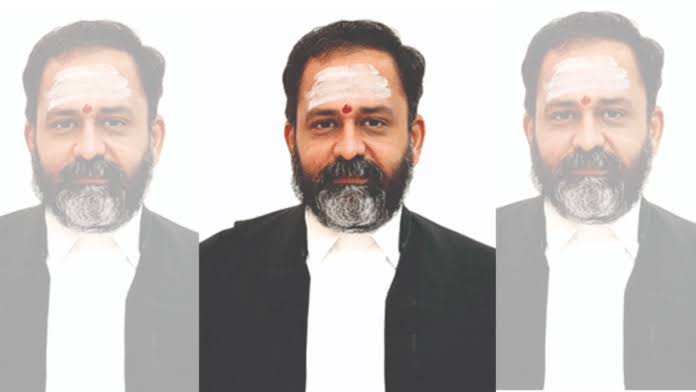
“I hopefully have four and a half years of service. In these four and a half years, I have to show excellence. I have to keep Sanatana Dharma in my heart,” says Justice GR Swaminathan of the Madras High Court on Saturday.
He was speaking at a function organised by the Dara Foundation at Chennai, according to Bar and Bench.
Justice G. R. Swaminathan has been in the news repeatedly over the past few months for a series of controversial observations made both from the bench and in public forums, particularly on issues related to caste, religion, social justice, and Dravidian politics. Several of his remarks and judicial observations have drawn sharp criticism from Dalit groups, civil society organisations, and political leaders, who accuse him of endorsing Brahminical and majoritarian viewpoints that conflict with constitutional values of equality and secularism.
Last year, MPs from the INDIA bloc had written letters to President Droupadi Murmu and then Chief Justice of India B.R. Gavai, raising concerns about the conduct of Justice G.R. Swaminathan.
Dated 2025 August 11, the letters accused the judge of showing preferential treatment to advocates from the Brahmin community and those associated with Hindu right-wing ideologies.
Sanatana Dharma has been increasingly criticised in public discourse because it is often mobilised today not merely as a spiritual or philosophical tradition but as a framework used to defend caste hierarchy, social exclusion, and Hindu majoritarian politics.
Dalit and anti-caste movements have long pointed out that invoking Sanatana Dharma has historically been used to legitimise Brahminical dominance, patriarchal norms, and discrimination against marginalised communities. In the current political climate, critics say the term is frequently deployed to silence dissent, brand opponents as “anti-Hindu,” and normalise the fusion of religion with state power, making its invocation by a constitutional authority particularly contentious.
Responding to the judge’s remarks, DMK spokesperson Saravanan Annadurai said: “When India became a republic on the 26th August 1950, the only guiding light is our Constitution for Administration of Justice. Will a judge be allowed to continue if he says Quran or Bible should guide him over his Judicial Service.”
This story was originally published in maktoobmedia.com. Read the full story here.