
By Nilanjan Mukhopadhyay
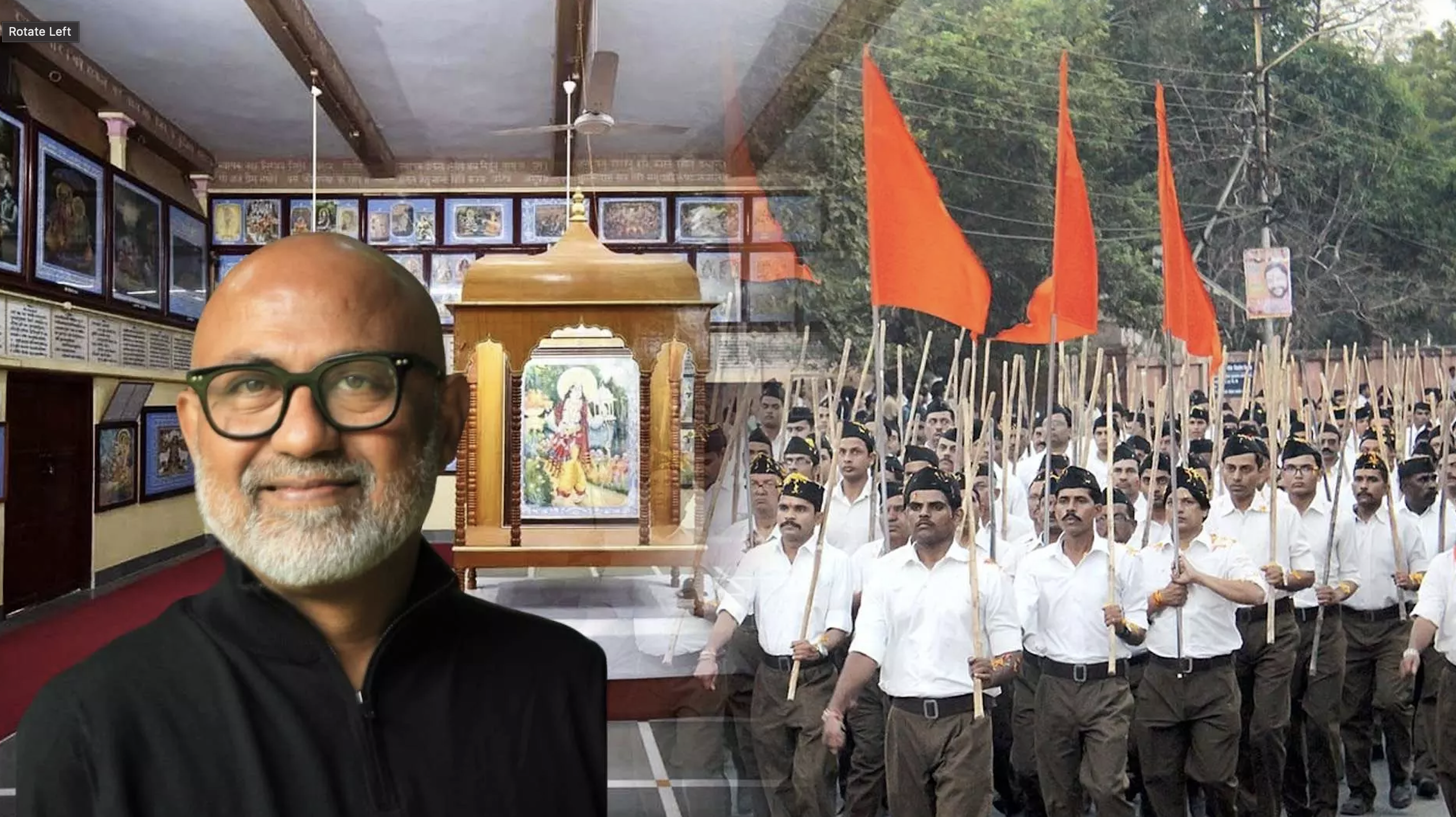
The idea that Gita Press helped carry a century-long political project into ordinary Hindu homes — quietly, cheaply, and persistently — is at the heart of journalist Akshaya Mukul’s argument on the publisher’s parallel journey alongside the Rashtriya Swayamsevak Sangh (RSS), which completed its centenary last year.
The Federal spoke to Mukul, who has authored Gita Press And The Making of Hindu India, on how the Gorakhpur-based publisher — founded in 1923 — and its house journal Kalyan (launched in 1926) shaped ideas, rituals, and social attitudes that later became central to Hindutva-era politics.
Excerpts from the interview:
How have the paths of Gita Press and the RSS converged over the years and also remained distinct from each other?
It all begins in the first quarter of the 20th century. Gita Press in 1923, Kalyan in 1926, and the RSS in between in 1925 — those three to four years are a ferment when what we now call the Hindu right wing got organised. The Hindu Mahasabha was already there, besides a few other organisations.
If you track similarity and distinction, look at the early 1930s — specifically around the Poona Pact — when Gita Press and Hanuman Prasad Poddar, the founding editor of Kalyan, get into a major argument with Mahatma Gandhi on issues such as caste, temple entry and inter-dining. Since then, Gita Press has been saying it works for bhakti, gyan, vairagya, kalyan, and to a large extent it does. But at every flashpoint from 1926 onwards, there’s a choreography between the RSS, Gita Press and similar organisations.
This story was originally published in thefederal.com. Read the full story here.