


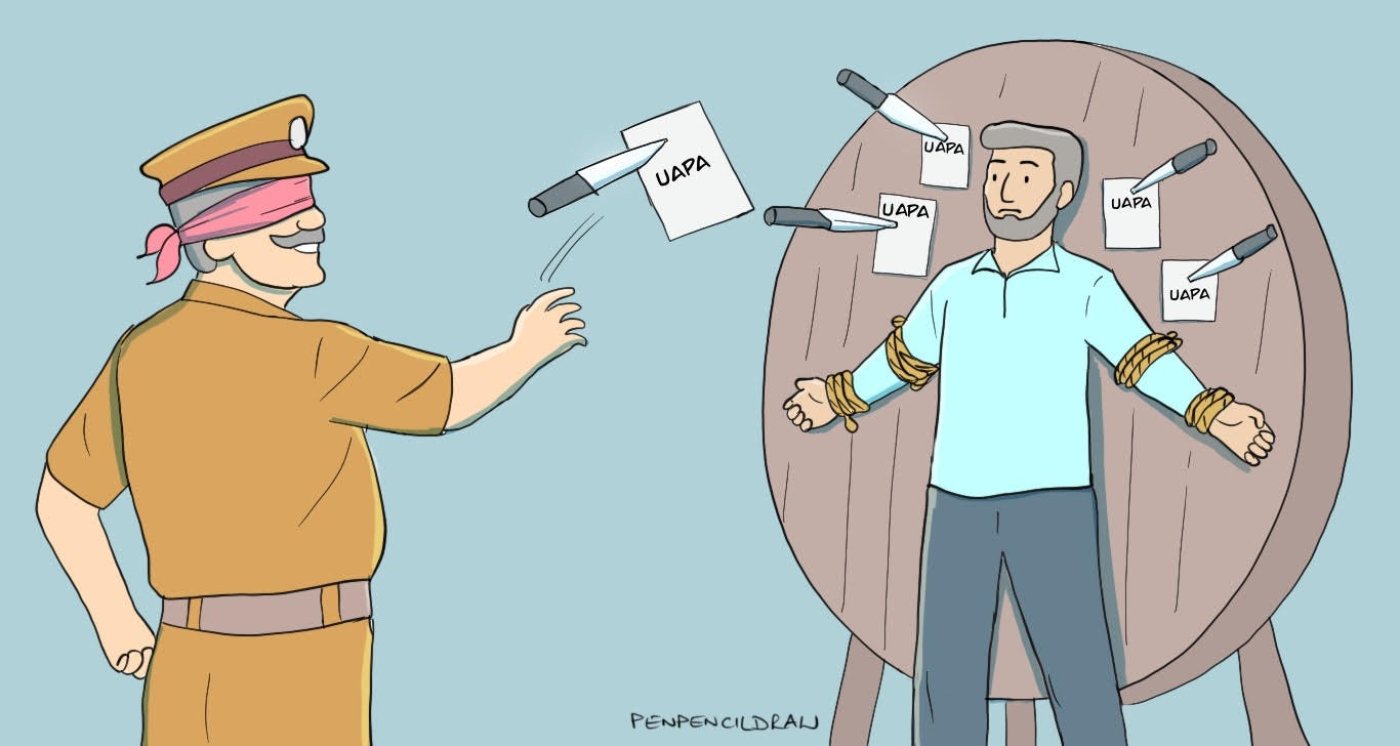
Delhi: In the 58-year history of the Unlawful Activities Prevention Act (UAPA), 1967, public and parliamentary opposition to it has underlined the potential for its use against political opposition, the indiscriminate use of it against minority communities, definitional vagueness, and the power to detain, arrest, torture and prolong trials for years.
“It is a case of a Government that is greedy for power, wants more power and does not know how to use the powers that it has already got,” said Dahyabhai V Patel, the son of Sardar Vallabhai Patel, representing the Swatantra Party when the UAPA was being debated in 1967.
“Why do they want such powers again and again?” he asked.
The UAPA was originally enacted to criminalise “unlawful activities,” defined as any action taken by an individual or association that supports any claim to bring about the secession of any part of the territory of India from the union, disrupting the sovereignty and territorial integrity of India, or causing disaffection against India.
In 2004, the UAPA was amended to include provisions that punished acts of terror in addition to criminalising unlawful activities, following global trends to combat international terrorism.
This story was originally published in article-14.com. Read the full story here.