
By Anand Teltumbde
Summary of this article
- A reading and discussion on the Kunan-Poshpora mass rape case became a scene of violence and institutional capitulation at APU
- APU was set up in 2010 to create space for rigorous liberal arts education and engagement with social justice issues that mainstream Indian universities tend to avoid
- The attack on APU must be understood within the broader pattern of systematic assault on campus autonomy in India since 2014.
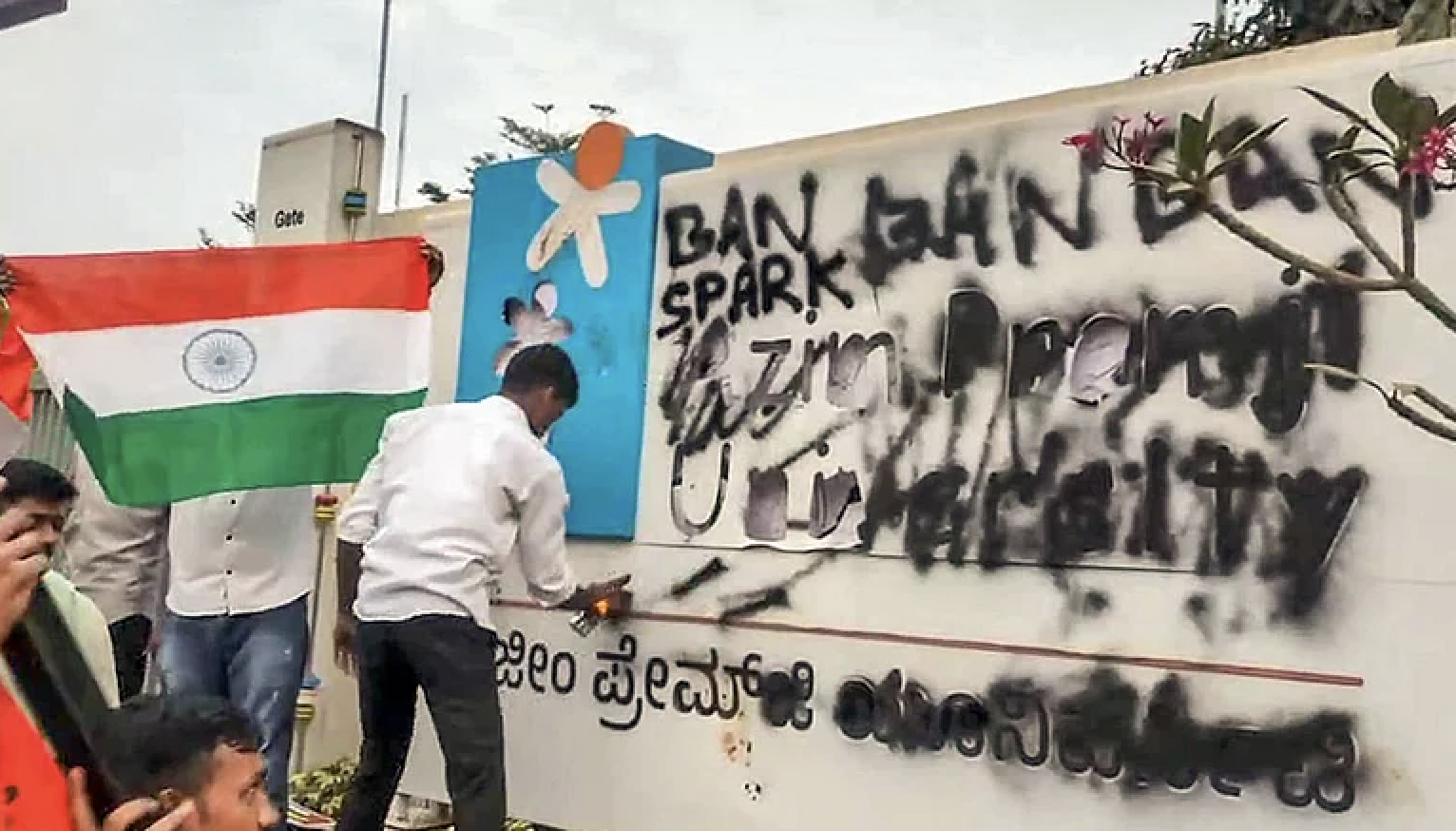
On February 24, 2025, Azim Premji University (APU) in Bengaluru joined the growing list of Indian campuses where academic freedom has been violently attacked and administratively betrayed. What was planned as a reading and discussion on the Kunan-Poshpora mass rape case which is alleged to have occurred in Kashmir 35 years ago, became a scene of violence and institutional capitulation. The incident reveals a coordinated national pattern: right-wing groups attack, administrators buckle, and spaces for critical inquiry are eliminated. APU, founded with explicit commitment to liberal values, has demonstrated that even institutions created specifically to resist ideological capture cannot withstand the sustained assault on academic freedom under the Bharatiya Janata Party government’s rule.
Established in 2010 with funding from Wipro founder Azim Premji, APU aimed to create space for rigorous liberal arts education and engagement with social justice issues that mainstream Indian universities increasingly avoided. APU distinguished itself through substantial scholarships ensuring economic diversity, interdisciplinary programs focused on inequality, faculty committed to critical inquiry, and institutional structures designed to resist political interference that had compromised other universities.
Over its first decade, APU established significant reputation. Its education programmes attracted students committed to working in underserved areas. Its development studies engaged seriously with caste, gender, and minority rights. Students described a campus culture encouraging critical thinking and engagement with uncomfortable questions about power and injustice. But this success made APU a target. As Hindu nationalism systematically captured Indian institutions, spaces maintaining independence became threats to be neutralised.
The Systematic Capture of Indian Campuses
The attack on APU must be understood within the broader pattern of systematic assault on campus autonomy since 2014. University after university has faced similar trajectories: students organising around issues challenging Hindu nationalism are targeted by the Akhil Bharatiya Vidyarthi Parishad (ABVP); administrations respond by disciplining activists rather than protecting them; and universities transform from spaces of inquiry into sites of ideological conformity.
IIT Madras in 2015 banned the Ambedkar Periyar Study Circle following ABVP complaints that the group was promoting ‘hatred against the Prime Minister.’ The University of Hyderabad in 2016 suspended five Dalit students including Rohith Vemula following a BJP minister’s demand for action against ‘anti-national’ activities. Vemula’s subsequent suicide exposed the lethal consequences of administrative complicity in political persecution. Jawaharlal Nehru University in 2016 saw students arrested on sedition charges following an event on Kashmir, with ABVP activists attacking students and journalists on campus. Allahabad University in 2017 witnessed students protesting fee hikes facing police violence and mass suspension. Banaras Hindu University in 2017 saw female students protesting inadequate security being lathi-charged by police on campus at night. Minor skirmishes abound across the country. The latest episode at JNU, where the police blocked a democratic protest march by students, used force against them and made arrests, is part of this troubling pattern.
This pattern is normalised in Indian campus life. The ABVP targets student activists organising around caste justice, minority rights, or left politics. Administrations discipline students for creating ‘disturbance’ rather than protecting them. Police and courts treat activism as potential criminality. Media amplifies ‘anti-national’ narratives while minimising right-wing violence. The cumulative effect chills dissent as students recognise that organising invites violence, discipline, prosecution, and stigmatisation.
Spark: Creating Spaces for Political Consciousness
The Spark Reading Circle emerged from students’ recognition that spaces for political discussion were disappearing. In universities dominated by placement-focused careerism and atmospheres of fear, Spark sought to create deliberate space for reading and discussing social and political issues—caste, gender, labour, Kashmir, communalism, state violence—precisely the topics the BJP government has worked to render taboo.
Spark operated through publication and discussion circles, bringing students together for structured engagement with texts and issues, creating communities of inquiry and political education where formal curricula avoided controversy and faculty faced pressure against political engagement. The Kunan-Poshpora discussion that ABVP attacked exemplifies this approach. The 1991 mass rape of Kashmiri women by Indian Army personnel has been documented, though the military has never acknowledged it. Discussing this means confronting uncomfortable truths about state violence and military impunity—precisely what right-wing groups cannot tolerate because it threatens narratives of the state as benevolent protector.
This story was originally published in outlookindia.com. Read the full story here.