
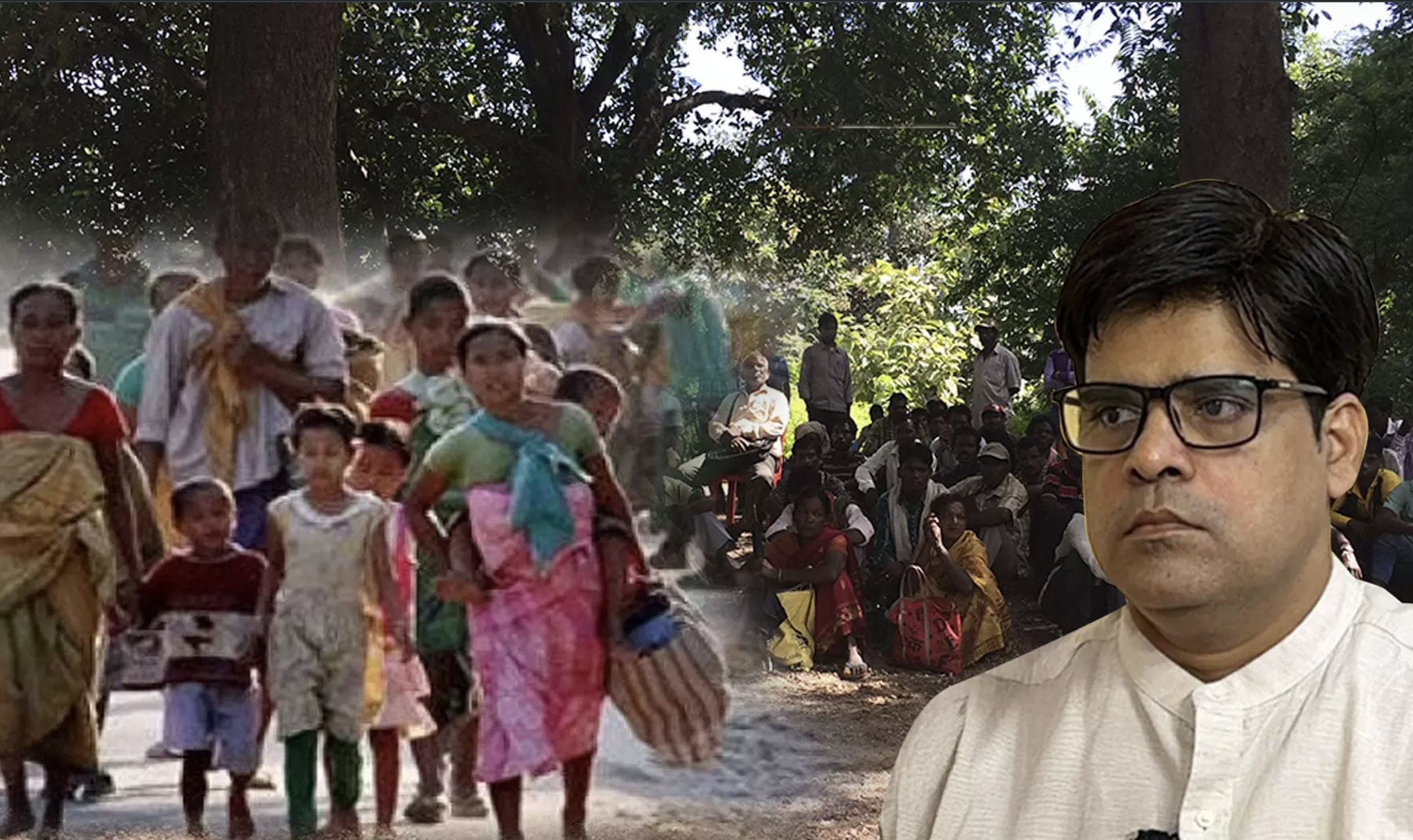
By Nilanjan Mukhopadhyay
“The Vanvasi Kalyan Ashram was primarily formed to counter the conversion of tribal communities to Christianity.”
That blunt assessment lies at the heart of the debate over the RSS’s engagement with India’s tribal communities. As the RSS marks its centenary year, questions about how the Sangh Parivar has mobilised, organised and politically engaged tribal societies have gained renewed attention. The Federal spoke to political scientist Dr Kamal Nayan Chaubey, author of Adivasis or Vanvasis: Tribal India and the Politics of Hindutva, about the ideological framing, political strategies and evolving agenda of the RSS’s tribal outreach organisation, the Vanvasi Kalyan Ashram.
Vanvasi, Adivasi or Janjati — why has the RSS preferred the term Vanvasi?
When we think about the term Adivasi, which is widely used in everyday language, it essentially means someone who has lived on the land from the beginning — the son or daughter of the soil. Some people even prefer the term Moolvasi. In tribal politics, however, Adivasi has become the most accepted term.
For the RSS and the Vanvasi Kalyan Ashram, the meaning of Adivasi is problematic. They are open to using the term Janjati or Scheduled Tribes, but they are reluctant to use Adivasi. Their argument is that everyone who lives in India is an Adivasi. When they say this, they add certain conditions — for instance, they argue that people who have converted to other religions are not part of this identity. But those who identify as Hindus, they say, are part of the land and therefore Adivasis.
Their claim is that when one particular group says only they are Adivasis, it isolates them from the so-called mainstream. Instead, they emphasise that if all Hindus are Adivasis, then those living in forests can be described as Vanvasis — forest dwellers — and therefore part of Hindu society. For them, the term Vanvasi is more attractive because it helps assert that forest-dwelling communities belong to the broader Hindu fold.
This story was originally published in thefederal.com. Read the full story here.