


By Debby Jain
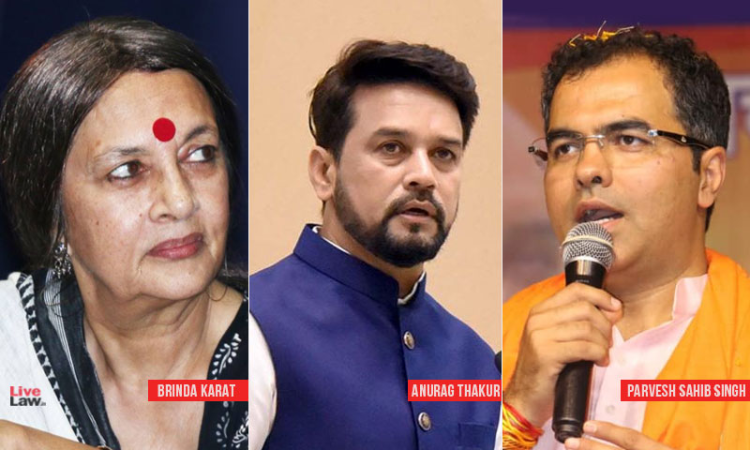
In CPI(M) leader Brinda Karat’s plea against alleged hate speeches by BJP leaders Anurag Thakur and Parvesh Verma in the year 2020, the Supreme Court today took a view that no cognizable offense for registration of an FIR was made out.
A bench of Justices Vikram Nath and Sandeep Mehta delivered the judgment, while dealing with Brinda Karat’s challenge to a Delhi High Court order which upheld the Magistrate’s refusal to direct the registration of FIR.
Briefly put, Brinda Karat’s plea referred to various speeches made by the two politicians including the speech dated January 27, 2020 given by Anurag Thakur at a rally shouting the slogan “desh ke gaddaron ko, goli maaron saalon ko”. Reference had also been made to another speech made by Parvesh Verma dated January 27-28, 2020, while campaigning for Bhartiya Janata Party and subsequently in an interview given to media.
The plea alleged that the speech threatened use of force to remove protestors who were protesting at Shaheen Bagh in the wake of Citizenship Amendment Act (CAA) and to promote hatred and enmity against Muslim persons by portraying them as invaders who will enter houses and rape and kill people.
Having gone through the record, the bench led by Justice Vikram Nath did not find any ground to interfere with the High Court order on merits but found fault with its observation that prior sanction is required before a Magistrate can order registration of FIR under Section 156(3) CrPC.
Observing that prior sanction is not required at the pre-cognizance stage, the Court set aside the High Court order to this limited extent. However, it categorically said that on viewing the material on record, including the alleged hate speeches, no cognizable offense was made out against the BJP leaders.
“The High Court has, on an independent assessment, held that the speeches in question do not disclose the commission of any cognizable offence, observing that the statements were not directed against any specific community nor did they incite violence or public disorder.
This story was originally published in livelaw.in. Read the full story here.