
By Aparna Bhattacharya
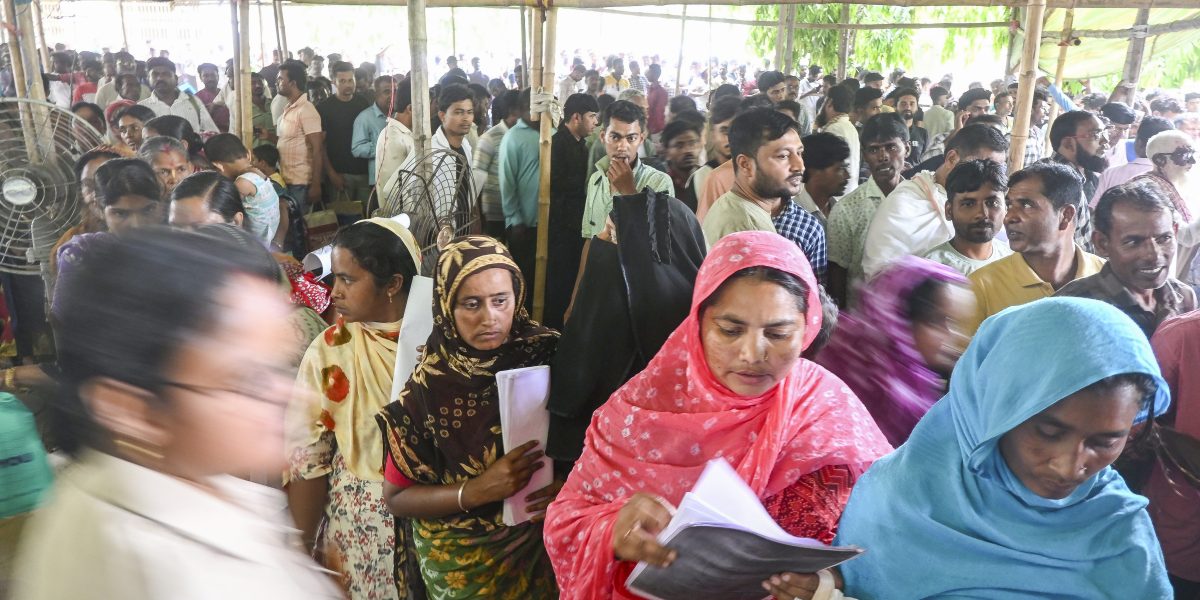
Firoza Bibi Mondal asked to check whether her name was included in the supplementary list published by the electoral tribunal. A loyal voter for the last three and a half decades, this is the first time she would not be able to cast her ballot. She was pinning her hopes on the chance that her name would be cleared by the tribunal at the very last minute, allowing her, like the rest of her family, to walk to the booth on polling day and vote.
Well, miracles often escape the poor. That is precisely the case this time as well. Firoza remains one of those 12,86,148 citizens who would not be able to cast their vote this election, a democratic tragedy that Supreme Court Justice Joymalya Bagchi casually dismissed with the remark, “This election, yes, perhaps they can’t vote.”
If the six names formally deleted by the tribunal are also counted, the number of people without relief rises to 12,86,154. For them, the constitutional promise of the vote has been reduced to a matter of timing, paperwork, and institutional capacity.
The systemic disenfranchisement that Firoza and millions face is the direct result of the deeply flawed Special Intensive Revision (SIR) process. Rather than functioning as a fair and transparent electoral audit, the SIR process has operated as an aggressive mechanism for mass erasure. By weaponising minor clerical errors and demanding stringent historical documentation that marginalised citizens, the process has unfairly shifted the burden of proof of belonging on the voter rolls onto the voters.
Instead of strengthening democracy, the bureaucratic overreach of this exercise has arbitrarily stripped lifelong citizens of their fundamental democratic right to vote without adequate warning, leaving them at the mercy of a sluggish administrative machine.
This story was originally published in thewire.in. Read the full story here.