
Sidra, Jammu: Ashraf Ali Kathana, 67, a retired employee of the Jammu and Kashmir sheep husbandry department, was offering his fajr namaz, or dawn prayers, on 19 May 2026, when police personnel and forest officials arrived at his home in Sidra Bandhi, on the outskirts of Jammu.
“I was not even allowed to fold my prayer mat,” said Kathana. “The police and forest officials dragged me out of my home. My wife was also praying on another mat. After completing her prayers, she was reciting the Holy Quran, but she too was not allowed to close it properly.”
The police and forest departments in J&K report not to the chief minister but to the lieutenant governor, who runs a parallel administration that reports to New Delhi.
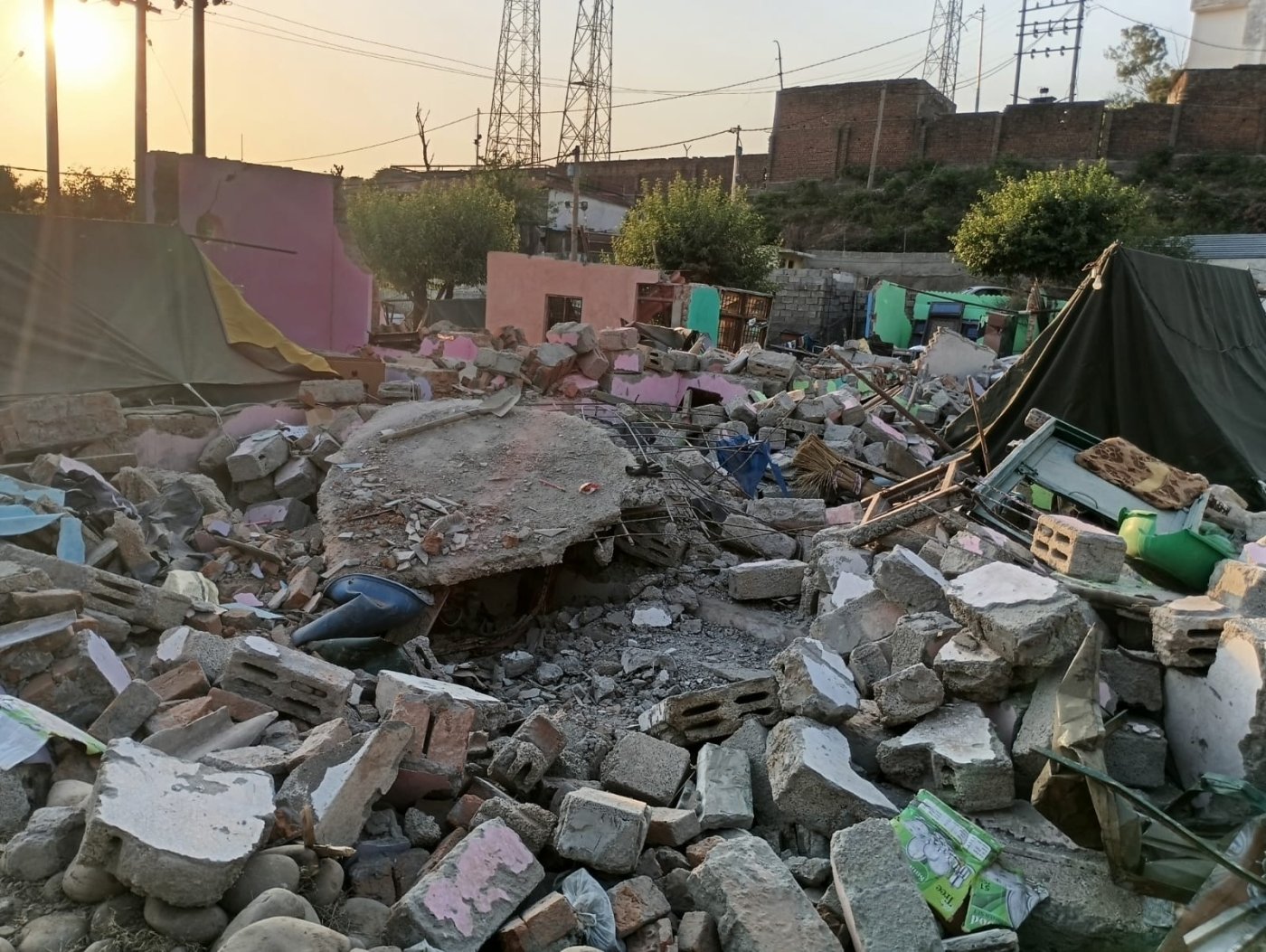
Kathana said officials asked him to alert neighbouring households to leave immediately. Within hours, residents said, 28 homes belonging to Gujjar-Bakarwal families were gone.
“Within an hour, everything had been reduced to rubble,” said Amjid Hussain, 52, one of those displaced, “They did not allow us to take our documents or belongings that held special value for us.”
The Sidra evictions were the latest in a series of moves to evict Gujjars and Bakarwals, beginning in 2020, right after the union government removed J&K’s special constitutional status by deleting Article 370.
Hundreds of cattle-herding Gujjars and Bakarwals—also migratory people, they rear goats and sheep—received notices over November 2020 across the former state for “illegal encroachment”, as Article 14 reported that month.
This story was originally published in article-14.com. Read the full storyhere.