


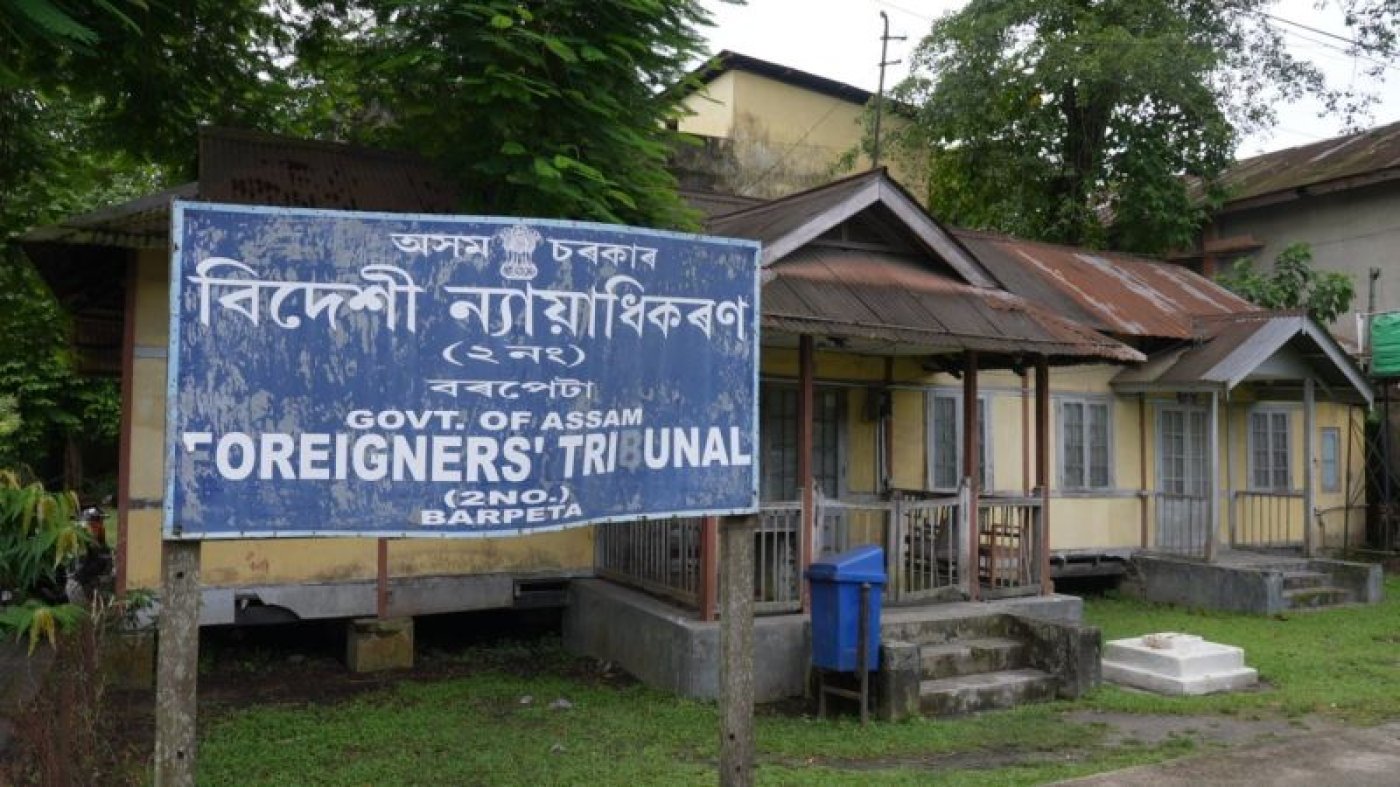
Guwahati, Assam: Fifteen official documents and records spanning more than six decades, along with ancestors listed in the 1951 National Register of Citizens, were not enough to convince the Gauhati High Court that Aminul Hoque was Indian.
On 30 June 2026, it upheld a foreigners’ tribunal (FT) order declaring the Assam daily-wage labourer a foreigner, revealing how the burden of proof imposed in citizenship cases is, often, almost impossible to meet, said experts.
A division bench of Justices Kalyan Rai Surana and Shamima Jahan dismissed a writ petition filed by Aminul Hoque, 38, and upheld a Guwahati-based FT No. 4 of Kamrup (Metropolitan)’s 2019 decision, declaring Hoque a foreigner.
The judgment came less than two weeks before the Supreme Court quashed 27 Gauhati High Court decisions that affirmed foreigners’ tribunal orders without hearing the accused in person. Reiterating that citizenship cases must satisfy the constitutional requirements of “fairness, reasonableness and non-arbitrariness”, the Court sent all 27 matters back to the tribunals for fresh hearings.
Hoque, originally from Hashdoba village in Goalpara district, had moved to Guwahati’s Azara area in search of work as a daily-wage labourer.
The Gauhati High Court held that Hoque had failed to discharge the burden of proof under section 9 of the Foreigners Act, 1946, which requires the person whose citizenship is in question to prove that they are an Indian citizen.
According to his petition, Hoque’s family originally lived in Charai Khasara village in Assam’s Goalpara district, where his father, grandparents, and other relatives were listed in the 1951 National Register of Citizens (NRC).
Repeated erosion by the Brahmaputra forced the family to move to Dhobakura village in the same district about 56 years ago, where his grandparents’ names later appeared in the electoral rolls of 1966 and 1970.
His parents subsequently moved to Ghugudoba before settling in Hashdoba, where Hoque was born in 1988. According to court records, his own name first appeared on the electoral rolls in 2013.
This story was originally published in article-14.com. Read the full story here.