
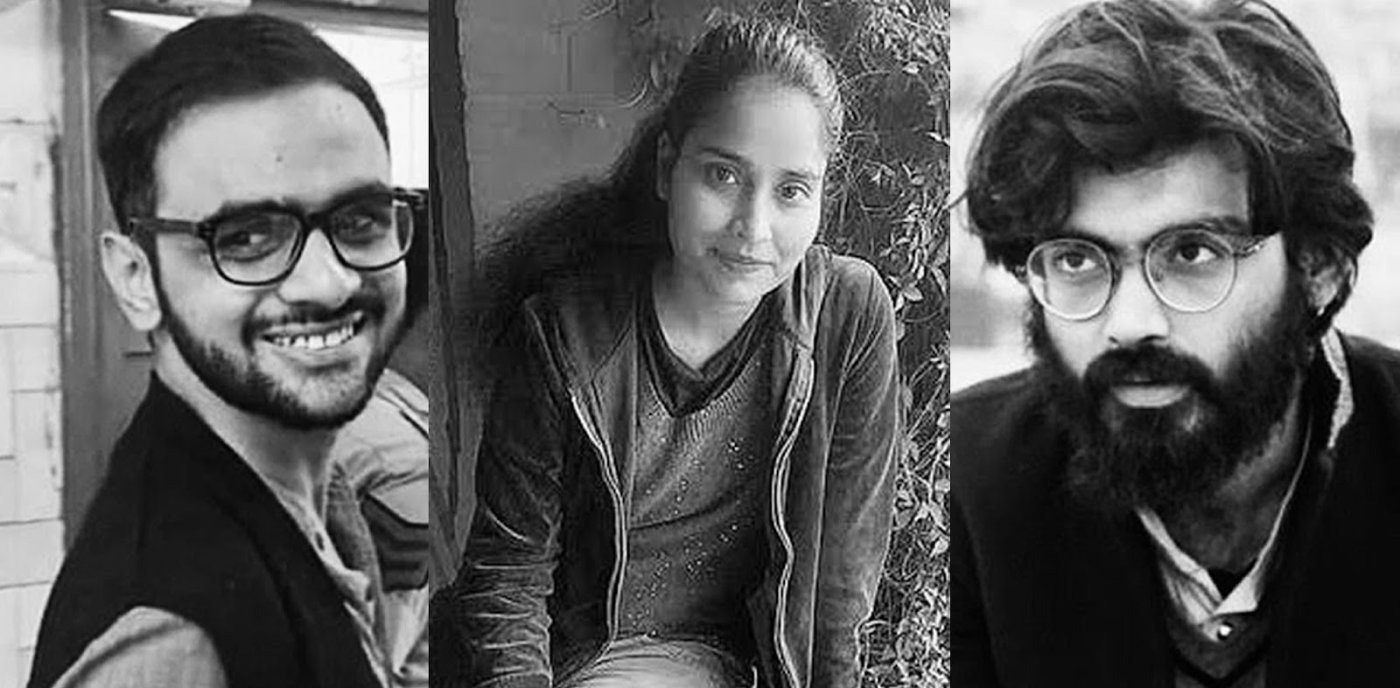
By Betwa Sharma
Delhi: Senior advocate Kapil Sibal, appearing this month for political activist Umar Khalid in his bail hearing, told a Supreme Court bench that a key conspiratorial meeting, allegedly held on 8 January 2020 between three co-accused to plan the communal riots of February 2020, never took place.
Sibal said the mobile location data showed that Khalid Saifi, a social activist and businessman, had left Shaheen Bagh by 9:30 pm, Khalid arrived at 11:31 pm, and Tahir Hussain, a former councillor, was never there that day.
And yet, when it was the State’s turn to argue, additional solicitor general S Raju said the meeting had taken place. He did not explain the discrepancy between what the mobile phone locations showed and the allegation, saying only that there were no calls between 7:58 pm and 8:54 pm that day, and that, in the absence of calls, the location could not be captured.
Raju cited the police witness whose testimony on this alleged meeting was dismissed by a trial court judge, who described it as “sketchy” and “does not appeal to the senses”, and criticised the police for “non-application of mind which goes to the extent of vindictiveness”.
In effect, in a case involving terrorism, murder and sedition charges, which could carry a life sentence or even the death penalty, the State’s claim of a key conspiratorial meeting rests on a witness whose testimony was already found unreliable by a trial court, without any explanation for the mobile phone location data that shows the accused were never actually there together.
Noting that there have been fabrications in what the police call the larger conspiracy case of the Delhi riots and other riots cases discovered by the trial courts in the past five years, Sibal, in his closing remarks, questioned the police’s credibility: “Now, if this is the conduct found by a judicial decision, what authority does this organisation have at all, except a motive?”
When arguments were heard before the Supreme Court this month, a crucial round that could be the last chance for bail for the foreseeable future, the prosecution once again laid bare the glaring lack of evidence against Khalid and the other Muslim activists, who have spent more than five years, some close to six years, in jail without bail or trial.
This story was originally published in article-14.com. Read the full story here.