

By Maktoob
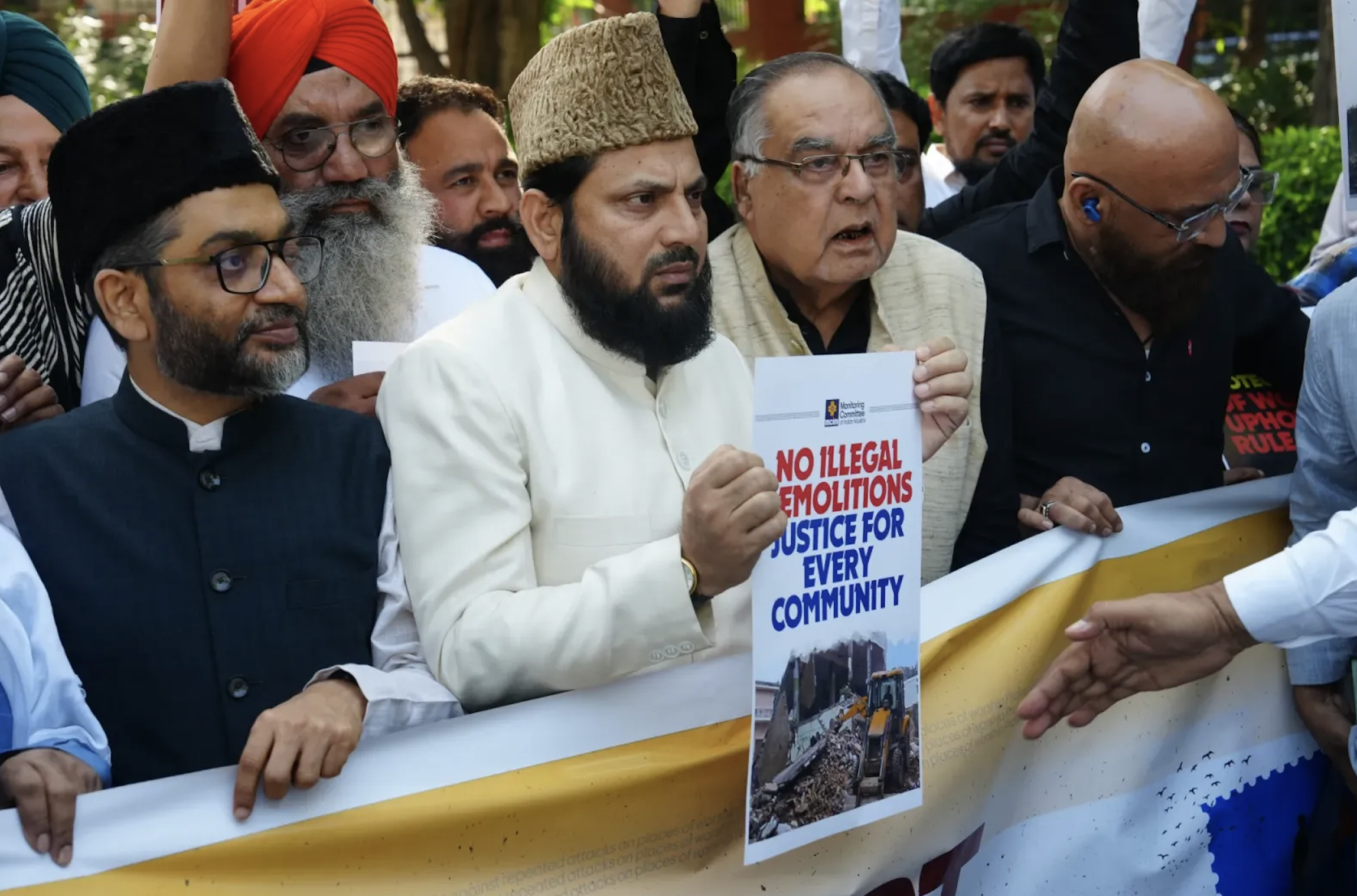
The All India Muslim Personal Law Board (AIMPLB) has announced a nationwide movement against what it described as the “social and political marginalisation of Muslims” and the demolition of mosques and madrasas across the country.
The decision was taken at a meeting of the Board’s Executive Committee, presided over by AIMPLB President Maulana Khalid Saifullah Rahmani, on Monday, June 22.
According to a statement issued after the meeting, the Executive Committee constituted an Action Committee tasked with coordinating with “democracy-loving and peace-loving sections of society” to highlight what it called the growing promotion of hatred and hostility against Muslims, attacks on their life, property, honour and dignity, and the resulting damage to communal harmony.
The Board also expressed strong opposition to the implementation of the Uniform Civil Code (UCC), stating that any “forced implementation” of the law would be contrary to the religious freedom guaranteed under Article 25 of the Constitution of India.
Expressing concern over legislative efforts related to the UCC in BJP-ruled states, the Committee noted that, after Uttarakhand and Gujarat, preparations are reportedly underway for the implementation of similar laws in Assam, Madhya Pradesh and Maharashtra.
The AIMPLB said it would continue its legal challenge to the Uttarakhand UCC law and pursue legal remedies against similar legislation enacted in other states.
The Executive Committee further objected to attempts to make Vande Mataram compulsory, arguing that such measures are inconsistent with the constitutional guarantee of religious freedom.
The Board stated that if the Union government were to enact legislation mandating that all citizens or students sing Vande Mataram, it would challenge the move in court.
Welcoming the interim order of the Calcutta High Court staying a West Bengal government directive requiring the singing of Vande Mataram in schools and madrasas, the Board reiterated its long-standing position that portions of the song are incompatible with the Islamic belief in Tawhid (the oneness of God) and are therefore not permissible under Islamic law.
The Board appealed to Muslims not to compromise on matters of faith and belief in the name of tolerance or patriotism.
This story was originally published in maktoobmedia.com. Read the full story here.