


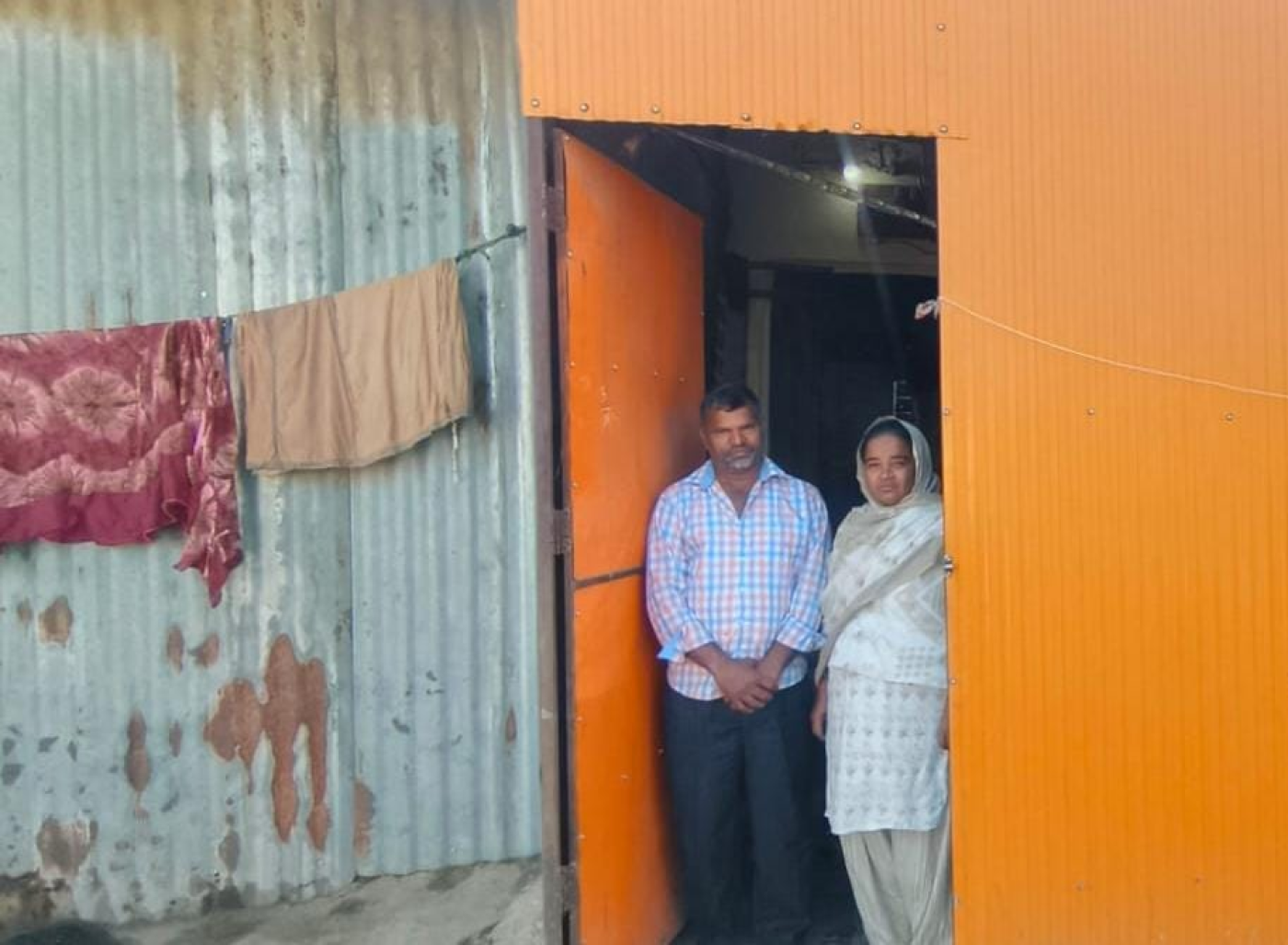
Mumbai: Rahim Khan never flinched.
Not when relatives, worried about rising anti-Muslim feeling, prodded him to move to a Muslim-majority neighbourhood, not when the neighbouring city of Jamner burned with communal tension, not when he heard rumours in 2024 that a Dalit man had been attacked a few kilometers away after a Hindu mob mistook him for a Muslim cattle thief.
Through it all, Khan, a 50-year-old mild-mannered soya bean farmer, stayed put in his Hindu-majority village of Betawad Khurd in northern Maharashtra, driven by the belief that it was going to remain untouched by the hatred that gripped the world beyond it.
Betawad Khurd was, after all, the place where generations of his family had lived. The village of 600 Hindu households—and just four Muslim—was his ancestral home; the people, his family.
“We had been here for at least 150 years now,” he told Article 14 over a phone call. “It never mattered, just how long we had been there for because the villagers never let it feel like this was a Hindu-majority village.”
That belief sustained him all his life.
In August 2025, his life changed.
On 11 August, his 20-year-old son Suleman Khan Pathan, an aspiring policeman, was lynched by a group of Hindu men, including some of his closest friends from the same village. The murder occurred at the village bus stand, just where the village began.
Many watched, but no one came to the rescue of the amiable young man who had grown up with almost exclusively Hindu friends and celebrated Hindu festivals with them.
This story was originally published in article-14.com. Read the full story here.