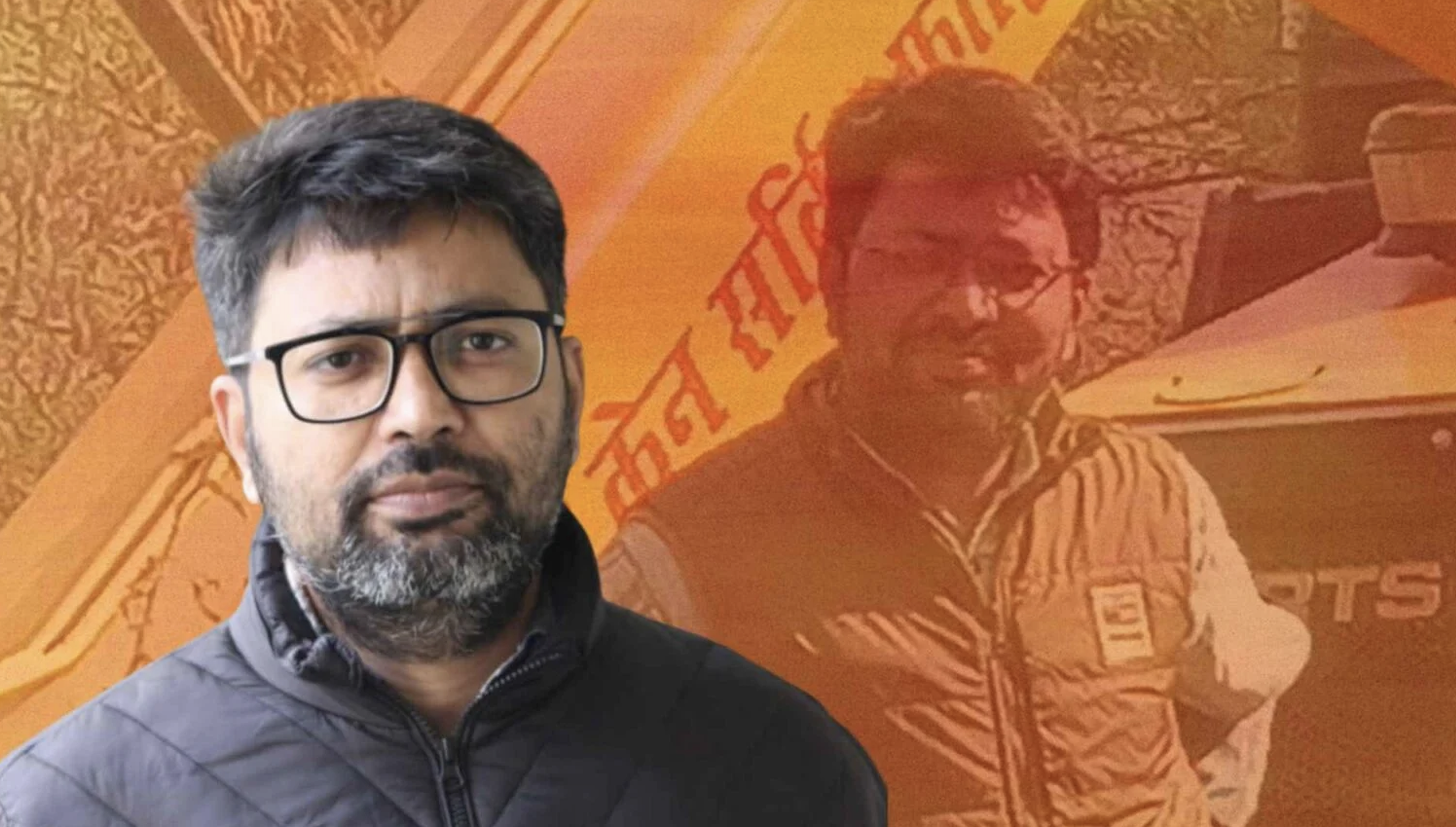


New Delhi: “German Universities have still not managed to come out of the shackles of the Nazi regime. That is what authoritarianism does to academia,” said Gilbert Sebastian, an assistant professor of political science at the Central University of Kerala in Kasargod in North Kerala.
The university administration suspended him in May 2021 after he called the Rashtriya Swayamsevak Sangh a “proto-fascist organisation” during an online class, and he was later reinstated after issuing a letter of regret. “There is a similar process going on with [other] universities in India,” he added.
Sebastian’s words echo the latest findings of the Academic Freedom Index, released by the Sweden-based V-Dem Institute in 2026. India’s rank has steadily decreased from 0.65 in 2012 to 0.14 in 2025 on a scale of 0 to 1 (1 being the highest). Last year, it was ranked 156th among 179 countries and it has sustained its position in the bottom 10% to 20% bracket this year too.
Similarly, the ‘Free to Think 2025’ report, released by Scholars at Risk (SAR), a New York-based international network promoting academic freedom, places India among 16 countries and territories with “concerning developments and trends” in academic freedom.
SAR criticised the ruling party’s grip on academia in the country, saying that the Bharatiya Janata Party “took actions to extend its authority over the country’s system of higher education, undermining university autonomy” and that they have tried to “exert political control and impose a Hindu nationalist agenda over universities”.
This steady decline reveals a pattern involving both state and non-state actors – legal policies, administrative bodies and fringe groups that have continuously attempted to curb and silence academic spaces.
Academicians have been threatened with various forms of punishment and legal action. The Indian Academic Freedom Network identified 62 such professors and lecturers from universities across the country, who were subjected to multiple punitive actions for their public opinions and political stances between January 2014 and April 2026. Most of them were targeted due to critical remarks they made against the government, right-wing authoritarianism and the saffronisation of their respective campuses.
This story was originally published in thewire.in. Read the full story here.