


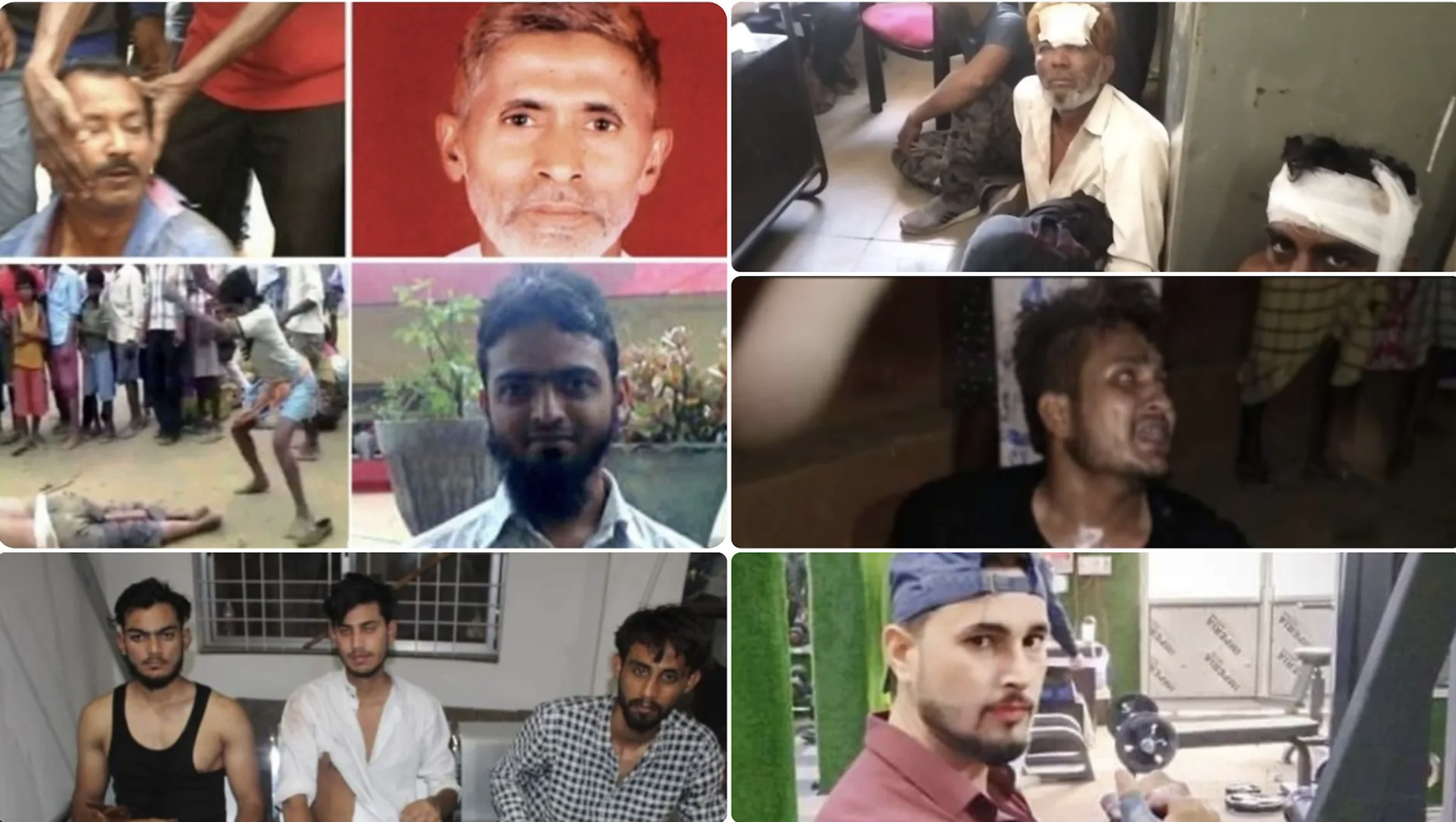
Mob-violence videos circulating are less than a minute long. A man lies on the ground, his face bruised, his shirt torn. A crowd circles him, shouting “Jai Shri Ram”. Someone kicks the victim in the ribs. Another forces him to repeat the slogans that will later be described as proof that this wasn’t about religion at all, just “mob fury” or a “local dispute”. By the time the police arrive, he is half-conscious. By the time his name appears in a newspaper the next day, he is already a number in a crime register – stripped of his story, his fear, and his last attempt to stay alive by insisting he had done nothing wrong.
Over the past decade, Indians have learned to watch such clips with a terrible familiarity. A Muslim man accused of transporting cows, a young boy returning from a madrasa, a worker pulled off a train for looking “suspicious”, a father beaten in front of his children because of his name, his beard, his skullcap marked him out as someone who could be punished without consequence. Media investigations, civil society fact-finding and rights group reports have documented case after case of lynchings, communal assaults and custodial deaths with a disturbingly similar pattern: rumours spread, a crowd gathers, violence follows, and the state arrives late or not at all.
Yet when these same years are translated into the official language of crime – the tables and categories of the National Crime Records Bureau – this landscape of targeted violence almost disappears. Where journalists have painstakingly pieced together dozens of killings and assaults with names, dates, locations and survivor testimonies, the NCRB often registers only a handful of “communal riots”, a small number of “mob violence” deaths under generic murder or rioting heads, and virtually no recognition of the religious identity of those who died. In the official record, there are very few Muslims being lynched or dying in custody. In the lived record, preserved by local reporters and human rights lawyers and grieving families.
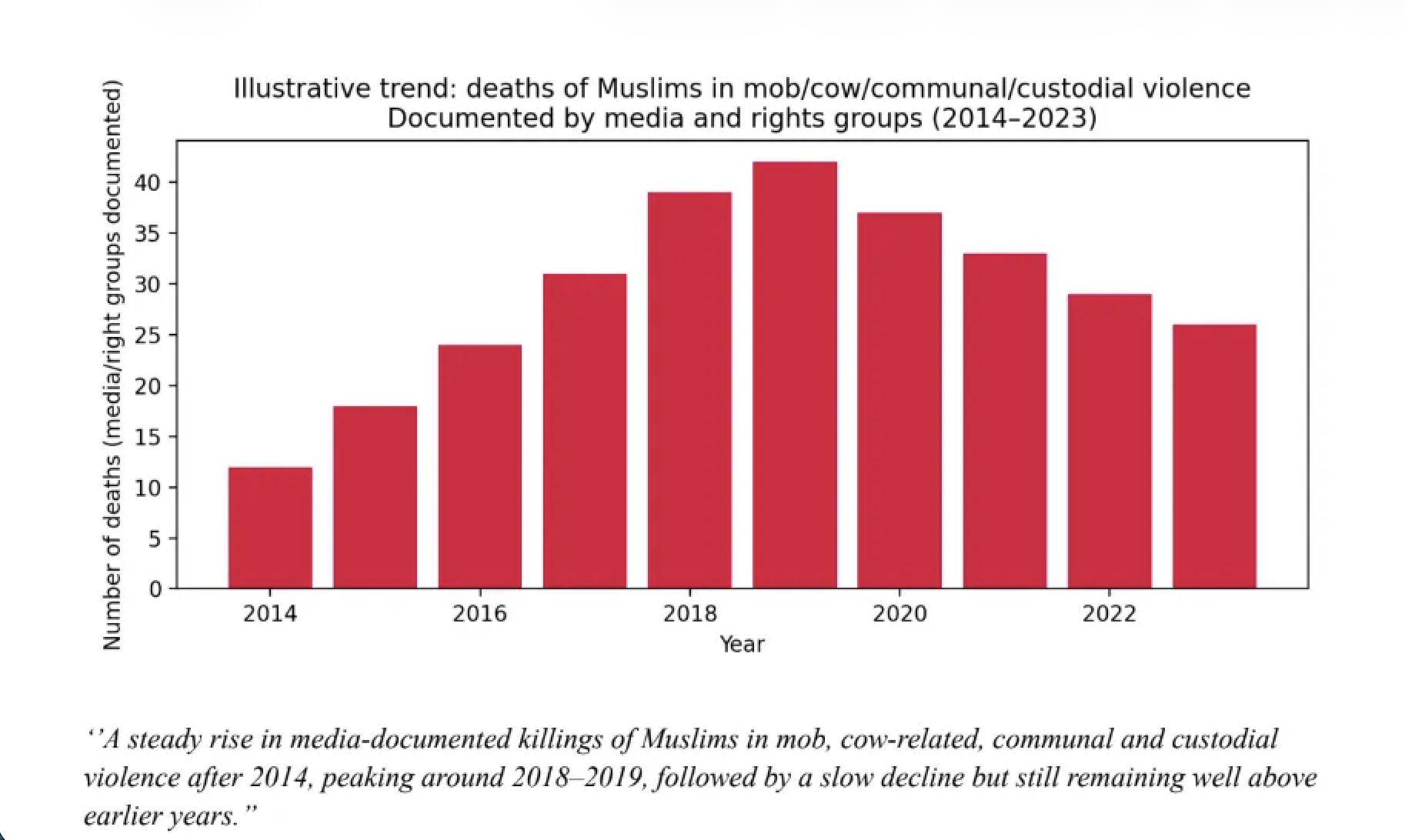
‘’A steady rise in media-documented killings of Muslims in mob, cow-related, communal and custodial violence after 2014, peaking around 2018–2019, followed by a slow decline but still remaining well above earlier years.’’
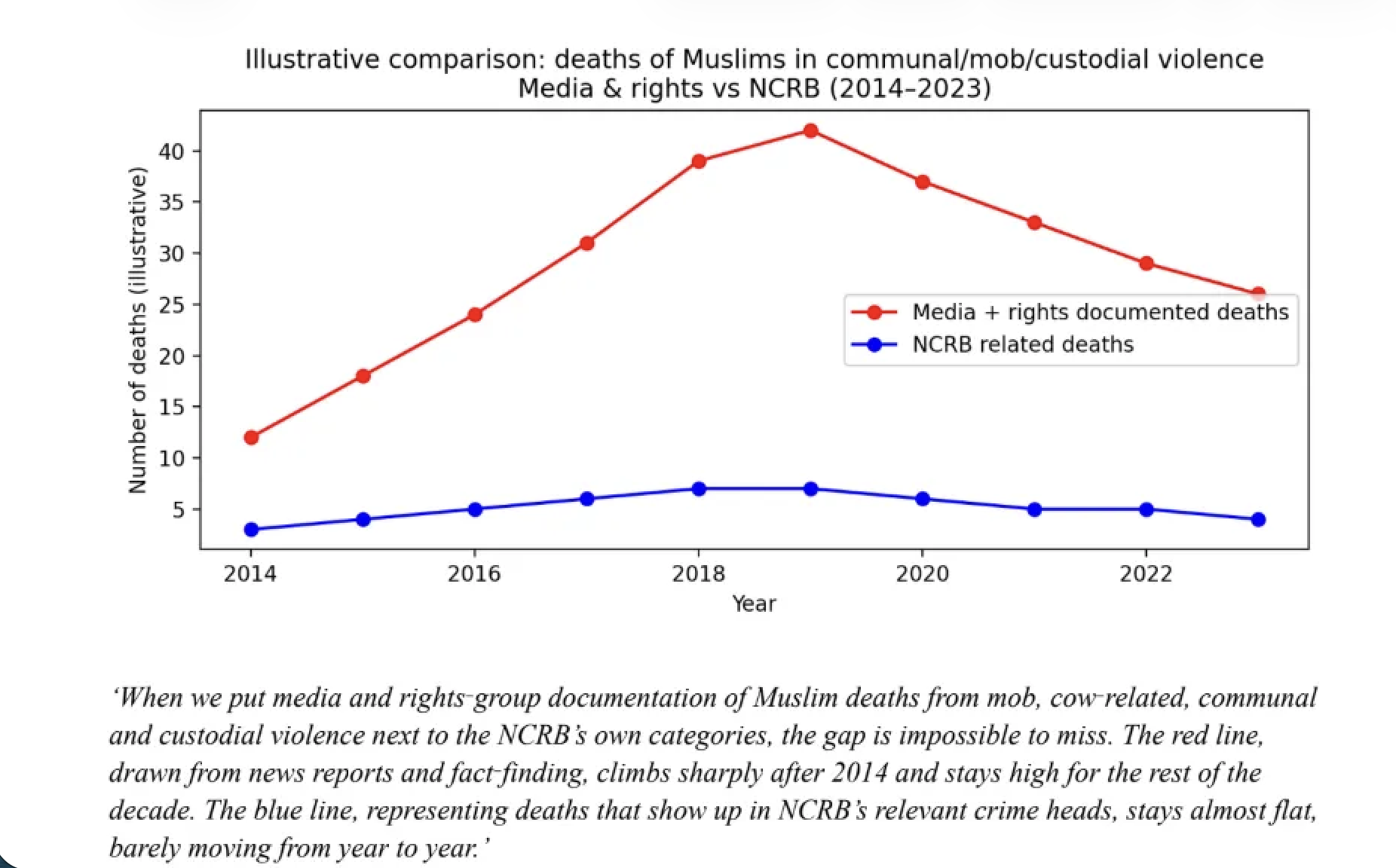
“When we put media and rights‑group documentation of Muslim deaths from mob, cow‑related, communal and custodial violence next to the NCRB’s own categories, the gap is impossible to miss. The red line, drawn from news reports and fact‑finding, climbs sharply after 2014 and stays high for the rest of the decade. The blue line, representing deaths that show up in NCRB’s relevant crime heads, stays almost flat, barely moving from year to year.’
This story was originally published in muslimmirror.com. Read the full story here.