


Goalpara, Assam: “If we are Bangladeshis, why do they need our votes?”
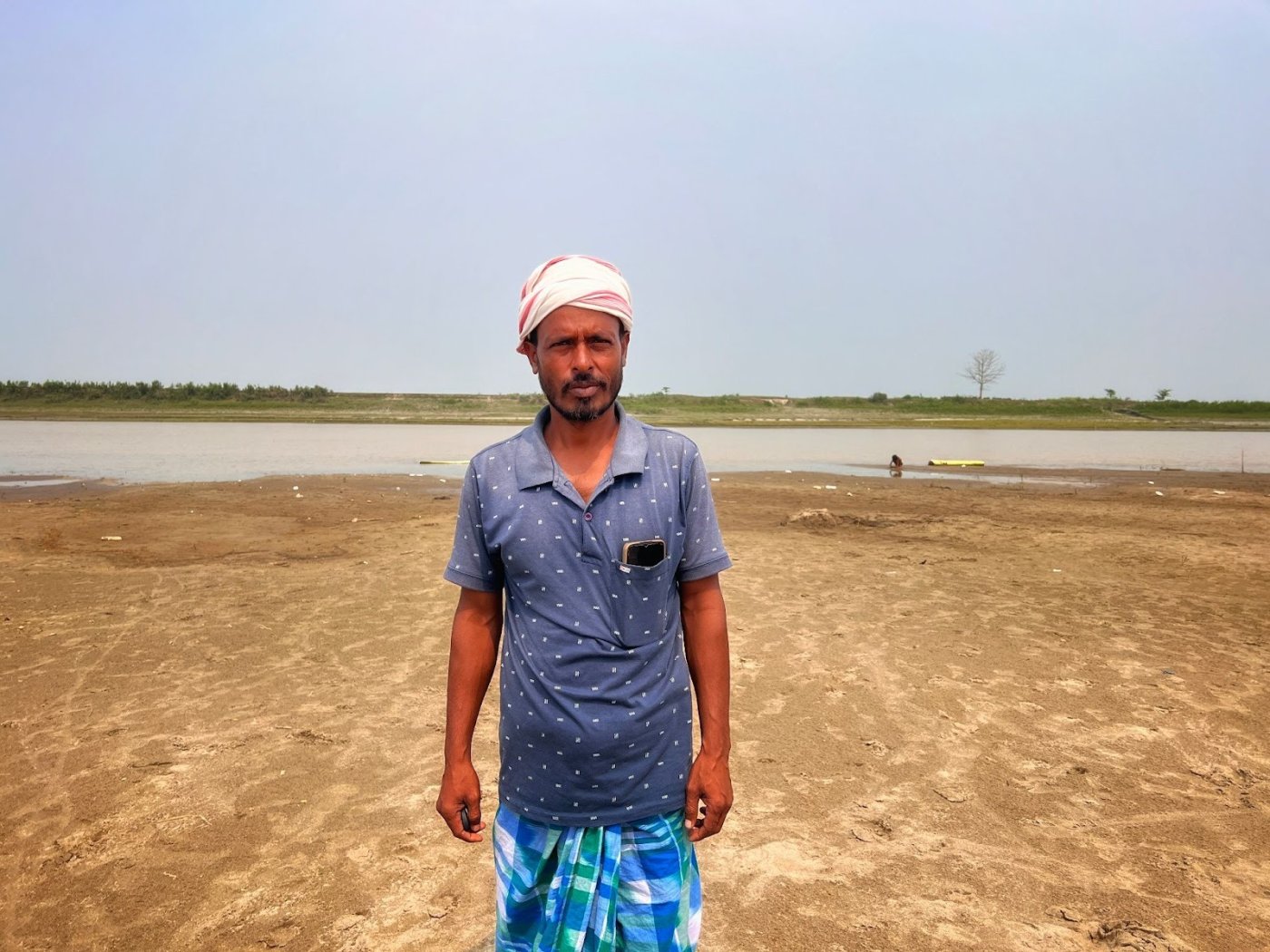
Abul Kalam, 39, stood on a shifting sandbank—locally called a char—in Goalpara district, western Assam. Around his head, he had tied a traditional Assamese gamusa, a thin, handwoven cotton cloth, one of the state’s most recognisable cultural symbols. He wore a faded blue shirt, a phone tucked into his pocket.
“And if they need our votes, why have they not given us a place to live?” said the father of six, describing how workers from multiple political parties had come asking for votes.
Among them: the Raijor Dal, a Congress ally, and the Asom Gana Parishad (AGP)—an ally of the ruling Bharatiya Janata Party (BJP), which oversaw the demolition of thousands of Muslim homes.
Behind Kalam, the Jaljali River flowed, a tributary of the Brahmaputra. The char was once his home. Erosion swallowed his village in 2004, forcing his family of ten to Dahikota Reserved Forest, about a kilometre from the local market.
They stayed for nearly 25 years—until, four months ago, their home was demolished in an eviction drive by the BJP-led Assam government, which described the residents as “infiltrators” encroaching on forest land. The term is shorthand for Bengali-speaking Muslims, the insinuation being that they are Bangladeshi.
Across Assam, thousands of evicted people have found their names missing from the electoral rolls, meaning they cannot vote. Around 97,000 others cannot vote because their names carry the ‘D’—or doubtful—voter marker, a designation unique to Assam’s citizenship-verification machinery.
Futility Of Documents
At Dubapara Luptachar, some residents faced objections to their inclusion on the voter list during the “special intensive revision” of rolls, on the grounds that they had relocated after being evicted. Some told Article 14 they received notices but had their names retained after hearings.
This story was originally published in article-14.com. Read the full story here.