


By Rajiv Shah
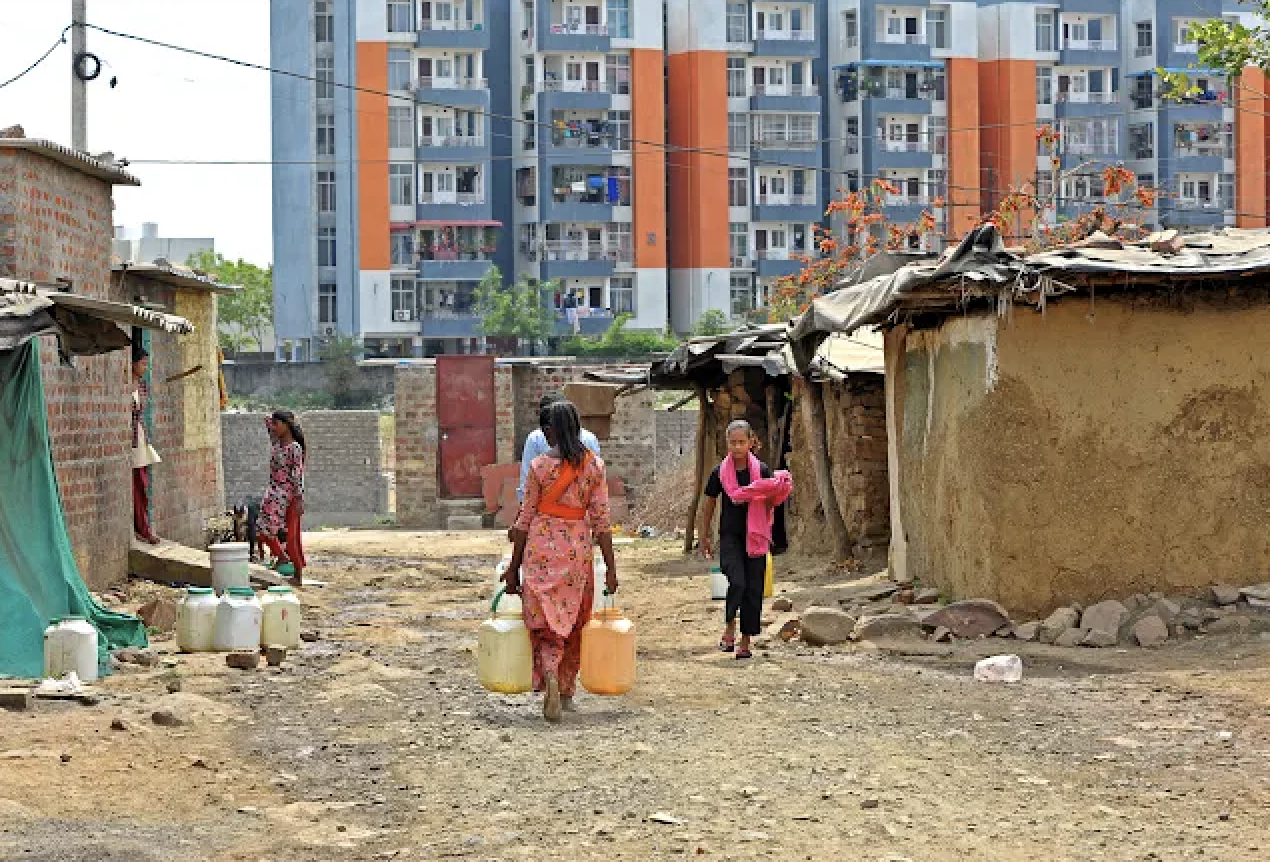
A comprehensive new study examining 1.5 million urban and rural neighborhoods across India has uncovered deep patterns of residential segregation and systematic inequality in access to public services, with findings that researchers say rival the scale of racial segregation in the United States.
The working paper, authored by Sam Asher, Kiritarth Jha, Paul Novosad, Anjali Adukia, and Brandon Tan, analyzed data from approximately 400,000 urban neighborhoods and 1.1 million rural neighborhoods — covering over 300 million marginalized individuals — to document how Scheduled Caste (SC) and Muslim communities are concentrated in neighborhoods with fewer schools, clinics, and basic infrastructure.
Segregation Levels Comparable to the United States
The study, “Residential Segregation and Unequal Access to Local Public Services in India: Evidence from 1.5m Neighborhoods,” finds that segregation of Scheduled Castes — historically known as Dalits or “Untouchables” — and Muslims in India is “high by global standards, and only slightly lower than Black-White segregation in the U.S.”
Using standardized measures, researchers found that the urban segregation of Indian Muslims is similar to current segregation levels of Black Americans in U.S. cities. India is “considerably more segregated than Brazil,” the only other major lower-middle-income country with comparable data available.
The Muslim population distribution is notably bimodal: 26% of urban Muslims live in neighborhoods that are more than 80% Muslim, while 17% of urban SCs live in neighborhoods that are more than 80% SC.
This story was originally published in counterview.net. Read the full story here.