


by Team Clarion
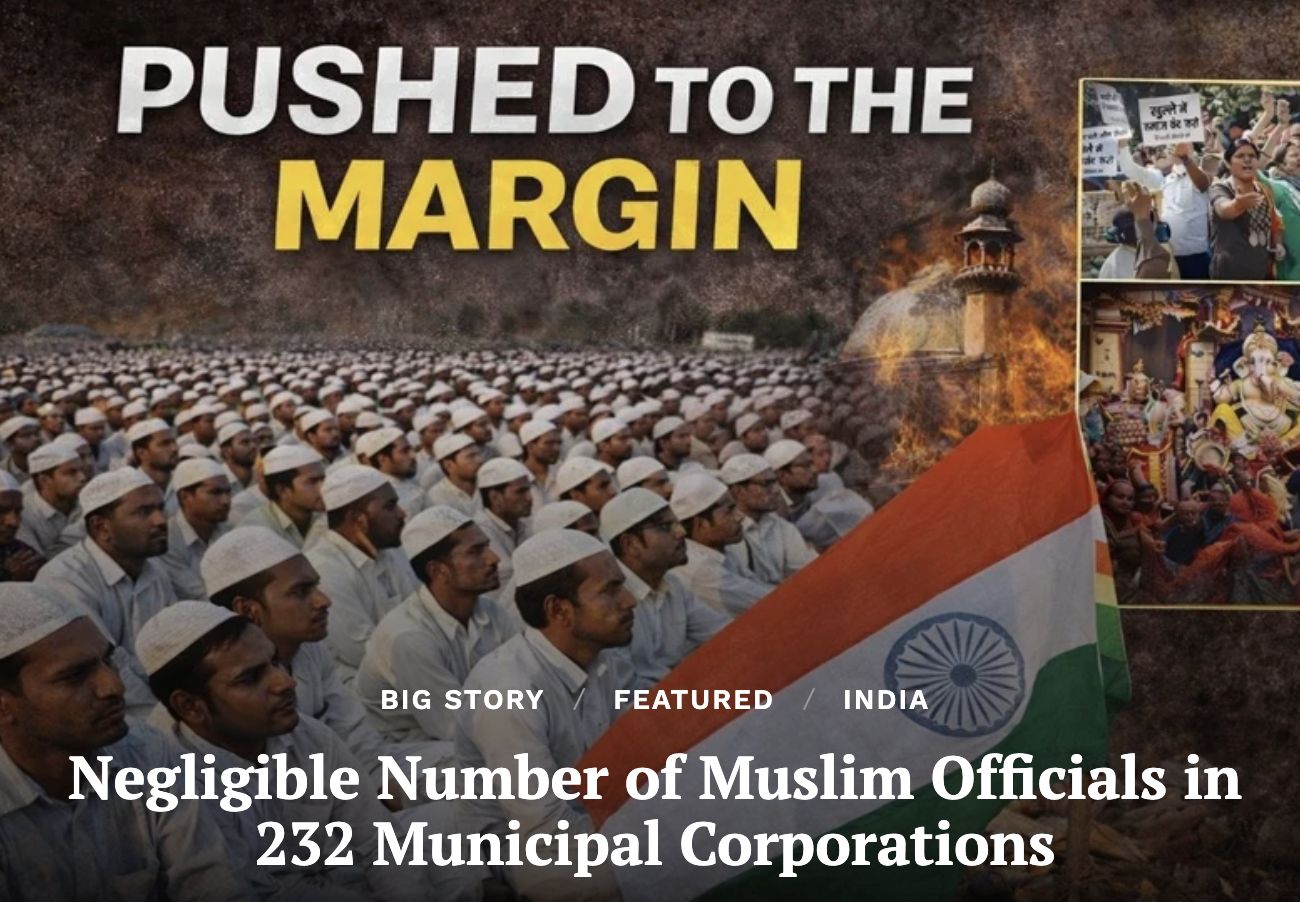
* Kolkata has two Muslims among 42 top civic officials
* Gurugram has one Muslim among 35 key officials, Nellore has five Muslims among 79
* Visakhapatnam has no Muslim among 204 officials
* The Ayodhya body has no Muslim among the 30 officials
* Prayagraj has 386 officials of whom 22 are Muslims
THE presence of Muslims among key officials in municipal corporations across India has remained very negligible, with several civic bodies not even having a single Muslim official in their setup, according to Mohammed Abdul Mannan’s new book, At the Bottom of the Ladder: State of the Indian Muslims –https://www.amazon.in/dp/B0GF1Q9R25 – which quantifies Muslim presence in 150 key organisations, including Union ministries, departments, and other organisations.
India’s cities are home to over 400 million people, a number set to touch 800 million-mark by 2050. Cities cover only three per cent of the land area but contribute more than 60 per cent to the country’s GDP. After the first municipality in the former Presidency Town of Madras in 1,688, the presidency towns of Bombay and Calcutta had their corporations in 1,773 and 1872, respectively. Other such urban local bodies were created after 1842.
Today, India has over 120 municipal corporations managing urban governance in various cities. However, a 2024 report by the Reserve Bank of India (RBI) says the country is home to 232 Municipal Corporations (MCs).
Their scope of work and responsibilities have been rising due to rapid population growth and the fast expansion of cities and urban development. They play a crucial role in local administration, providing essential services and infrastructure that directly impact the daily lives of residents and visitors.
Taxes earned by municipal corporations are grossly inadequate to meet their expenditure needs. Their tax revenues come from property, water, toll, and other local taxes. Between 2019-20 and 2022-23, their revenue receipts were over Rs 1 lakh crores each year, with over 58 percent accounted for by the top 10 MCs. For the financial year 2022-23, the total revenue receipts of 232 MCs stood at Rs142,178 crores while the expenditure incurred by them stood at Rs131,608 crores.
India has 53 million-plus cities or Urban Agglomerations (UAs), defined as a continuous urban spread constituting one or more towns and their adjoining outgrowths. These host 44 per cent of the country’s urban population as per the Census 2011. Across 28 States and seven Union Territories (UTs), there are 88 municipal legislations and 44 town and country planning legislations that govern 4,900-plus cities and towns. Of these, 49 legislations cover 149 municipal corporations. Chennai, Bengaluru, and Mumbai have their city-specific Acts.
According to the 2011 Census, the Mumbai Urban Agglomeration has seven urban local bodies (ULBs), apart from the Municipal Corporation of Greater Mumbai. The Kolkata Urban Agglomeration has a staggering 30 ULBs apart from the Kolkata Municipal Corporation. According to an OECD study, metropolitan areas with a metropolitan governance body have a per capita GDP that is, on average, seven per cent higher than that of metropolitan areas without such a body.
This story was originally published in clarionindia.net. Read the full story here.