

By Omar Rashid
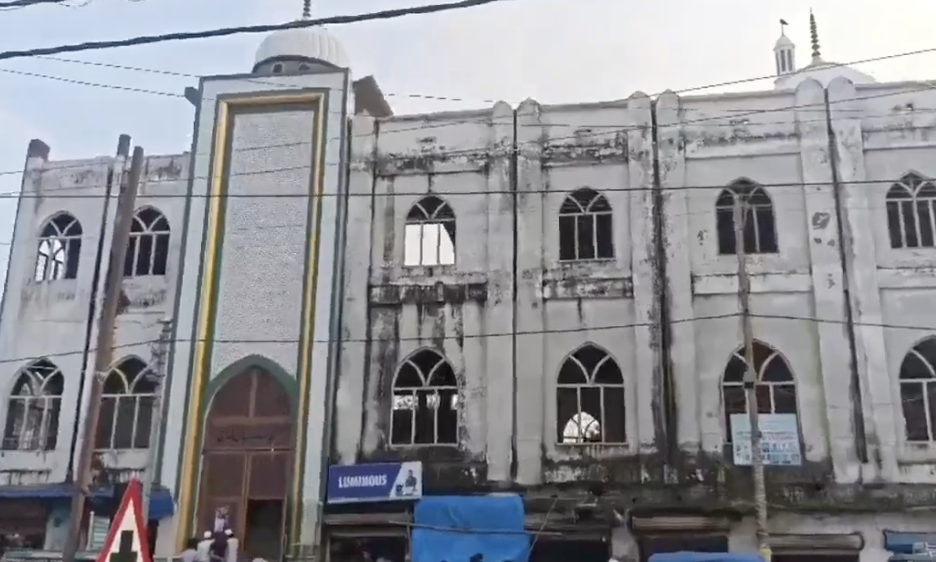
New Delhi: “If the courts rule against us and deem it illegal, we will remove it ourselves. The administration will not have to go through any trouble or inconvenience,” says Maulana Shahid Ali, the mutawalli (manager) of Madarsa Islamia Zia-Ul-Uloom, located in Uttar Pradesh’s Sitapur district.
Speaking to The Wire on October 10, Ali was reacting to a seven-day ultimatum issued by the local administration directing him to vacate the premises housing a mosque and several permanent commercial shops, or face forced eviction in the form of demolition.
The office of the tehsildar of Laharpur in Sitapur – a district adjoining the state capital, Lucknow – issued the eviction notice dated October 5 to Ali. The notice recalled that on May 15, the tehsildar court of Laharpur had passed a final order ruling that permanent shops built on a portion (0.0318 hectares out of a total 0.194 hectares) of graveyard land in Ahmedabad village constituted illegal encroachments. The order directed the occupants to clear the illegal constructions from plot number 541, free the land, and hand over its physical possession to the Gram Sabha within seven days of receiving the notice.
“If you do not voluntarily remove your occupation/construction from the said land within the aforementioned seven-day period, then after the expiry of the stipulated period, your illegal occupation/construction will be forcibly removed by the administration without any further notice,” warned revenue inspector Tambaur, Sunder Lal Solanki, in the notice.
He added that all execution expenses incurred during the clearance drive, alongside the ordered compensation amount, would be recovered from the management as arrears of land revenue.
“In such a case, you will be solely responsible for any damage or consequences arising and will also be liable for other legal action as per law,” the notice stated.
Ownership and jurisdictional status of the plot remains embroiled in a complex legal battle
According to the district administration, official revenue records register the land in question as kabristan (graveyard) land. Ali said that the main structure erected on the site is a functional mosque with around 12 commercial shops constructed below it, while the madrasa, dating back to 1918, operates in the immediate vicinity. There were a total of 24 shops on the premises, he added.
The administration’s aggressive push for demolition comes even as the underlying ownership and jurisdictional status of the plot remains embroiled in a complex legal battle before the Allahabad high court. Ali said that the site was a registered Waqf property, a contention denied by the state government. It has maintained that the land was a state property being managed by the Land Management Committee.
This story was originally published in thewire.in. Read the full story here.