
By The Quint
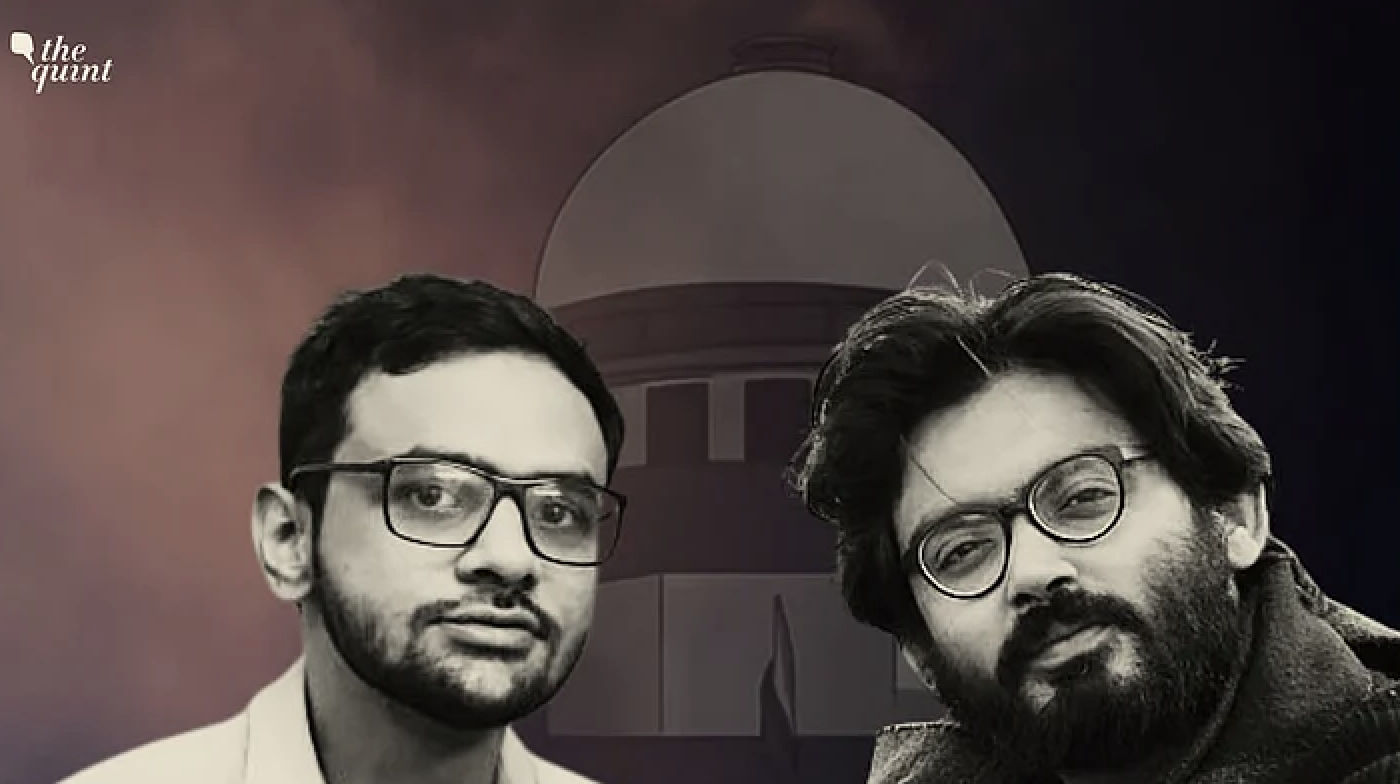
The Supreme Court of India has expressed serious reservations about its own earlier judgment that denied bail to activist Umar Khalid in a case under the Unlawful Activities (Prevention) Act (UAPA). The Court clarified that the principle of “bail is the rule and jail is the exception” applies even in UAPA cases, and statutory restrictions cannot override constitutional guarantees of personal liberty and the presumption of innocence.
According to Live Law, a bench comprising Justice Ujjal Bhuyan and Justice BV Nagarathna stated that the phrase “bail is the rule and jail is the exception” is not merely a statutory slogan but a constitutional principle rooted in Articles 21 and 22 of the Constitution. The Court emphasised that even under stringent statutes like the UAPA, restrictions on bail must remain circumscribed and cannot invert the constitutional relationship between liberty and detention.
As reported by The Hindu, the Supreme Court questioned its own January 2026 judgment that denied bail to Umar Khalid, noting that the decision did not properly follow the binding precedent set by a three-judge bench in the Union of India v. KA Najeeb case. The Court granted bail to a Jammu and Kashmir man in a separate narco-terror case, highlighting the need to adhere to established constitutional principles.
As highlighted by Scroll, the bench observed that the earlier verdict failed to correctly apply the principles from the Najeeb case, which recognised that prolonged incarceration and trial delays can override statutory restrictions on bail under the UAPA. The Court reiterated, “Bail is not an empty statutory slogan. It is a constitutional principle flowing from Article 21, and the presumption of innocence is the cornerstone of any civilised society governed by the rule of law.”
“Bail the rule and jail the exception is a constitutional principle flowing from article 21 and 22 and the presumption of innocence is the cornerstone of any civilized society governed by rule of law,” the bench stated.
Analysis showed that the Supreme Court also took note of the poor conviction rate in UAPA cases, with official statistics indicating that 94-98 percent of such trials end in acquittal nationwide, and the conviction rate in Jammu and Kashmir remains below 1 percent. The Court cited these figures as further justification for upholding the principle that bail should be the rule.
The bench underscored that the statutory embargo of Section 43D(5) of the UAPA must remain a limited restriction, operating subject to constitutional guarantees. Coverage revealed that the Court criticised the practice of accepting prima facie accusations as sufficient to deny bail, warning that this could turn pre-trial incarceration into a form of punishment, contrary to the right to a speedy trial.
This story was originally published in thequint.com. Read the full story here.