


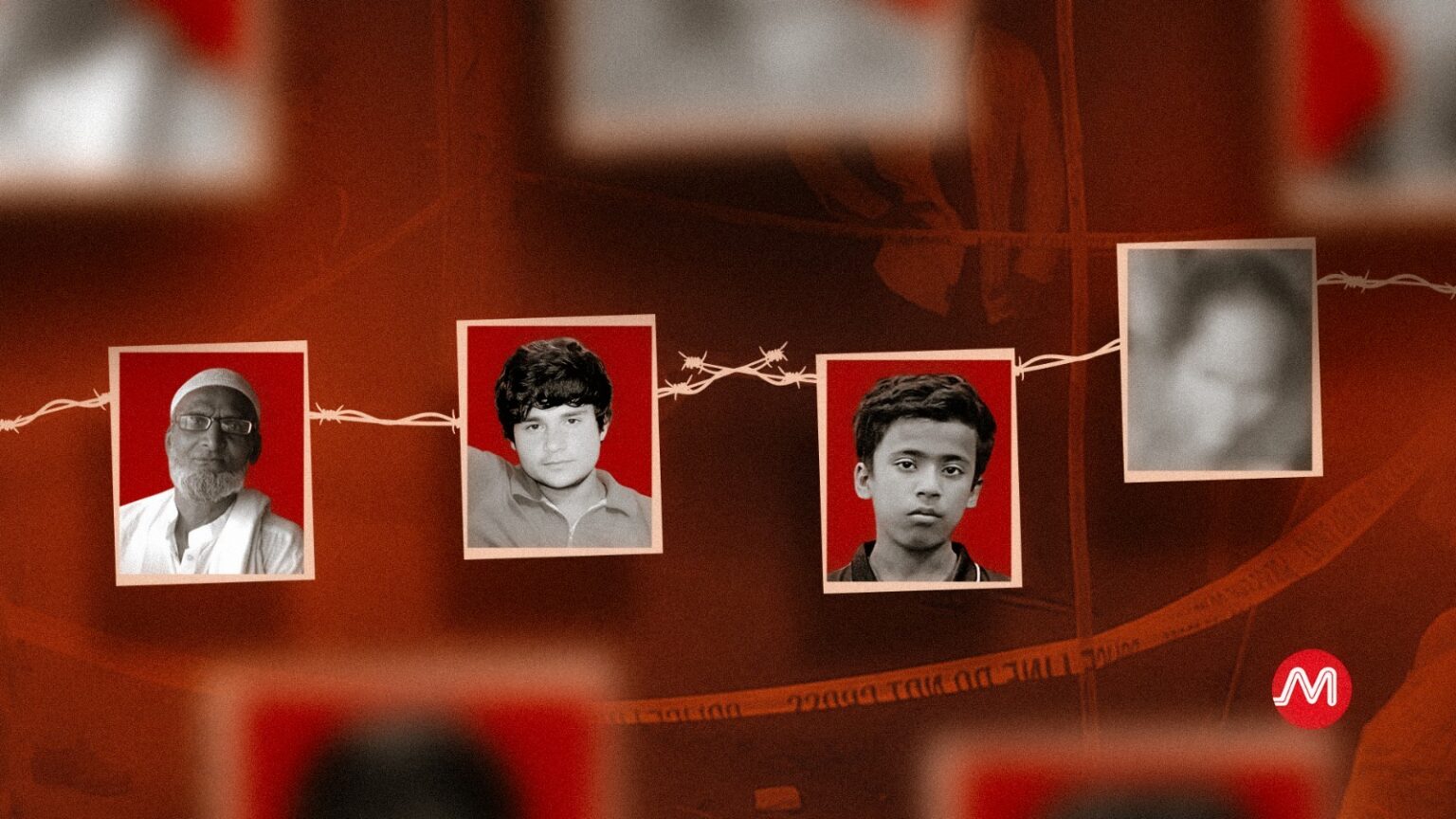
In recent weeks, several incidents of hate crimes reported from different states across the country have drawn attention to what activists describe as a pattern of targeted violence against Muslims.
In Bihar’s Madhubani district, a Muslim woman identified as Roshan Khatoon was allegedly beaten to death by a mob after she approached a village head seeking help in a dispute. According to local accounts, she was tied to a pole, assaulted by a group of people, and forced to drink cow urine and alcohol before succumbing to her injuries.
In Rajasthan’s Bhiwadi, 28-year-old truck driver Aamir Khan was shot dead in the early hours of 2 March while transporting fruit to Delhi. His family alleged that cow vigilantes attacked him while he was waiting near a mosque with his vehicle.
Communal tensions were also reported in parts of Uttar Pradesh, including Shahjahanpur, where clashes broke out after Holi colours were allegedly thrown on Muslim residents, leading to stone-pelting and injuries on both sides.
Most recently, Unaiz Khan, a 13-year-old in Uttar Pradesh’s Lucknow, was allegedly shot by a friend while he was fasting. The accused is reported to be the nephew of BJP leader Brajesh Pathak.
A 65-year-old man, Abdul Salam, in Bihar’s Darbhanga district, was lynched to death for merely trying to stop some young radicalised Hindu men from using Islamophobic slurs. He was attacked with an iron rod, killing him on the spot.
Rights groups say such incidents reflect broader trends in which local disputes escalate into anti-Muslim violence, targeting Muslims because of their religious identity.
“Ramadan should be a time of peace and spiritual reflection, but for many Muslims it increasingly brings anxiety about safety,” said Aasif Mujtaba, Muslim activist, researcher and founder of Miles2Smile.
Miles2Smile has been rehabilitating people affected by anti-Muslim violence, hate crimes, lynchings, and targeted attacks for more than five years.
Mujtaba said, “We have taken this responsibility upon ourselves to bring back to life those struck down by hate and communal killings, though it is not our work. It should be the responsibility of the government and the state to safeguard every citizen.”
“But sadly, we are not just treated differently but othered in unimaginable ways,” he added.
He further said, “Ramadan should be the time when we just want to be ourselves, left with our ibadah and self-reflection. But what we are forced to do instead is run from one place to another to rescue our people or rehabilitate them.”
“Many Muslims carry a quiet understanding that justice often feels distant when those accused of violence are linked to Hindutva mobs. Yet, even amid grief and anger, there are no calls from Muslim communities for retaliation against Hindus. There are no mobs demanding vengeance, no collective punishment being imposed on entire neighbourhoods,” Mujtaba told Maktoob.
“What remains instead is a heavy silence, marked by mourning, frustration, and a deep sense of helplessness,” he said.
He added, “When these things repeatedly happen and there is no accountability, we are always left with a question. I keep asking, and everybody should ask too: Is there really one law for everyone in this country, or are some lives simply worth less than others?”
Another civil rights activist, Nadeem Khan, national secretary of the Association for Protection of Civil Rights, said the pattern of violence reflects deeper social divisions.
“Mob lynchings and hate crimes are not isolated events. They are part of a climate where Muslims are frequently portrayed as suspects or outsiders.”
“The rule of law must prevail over mob justice,” said Khan. “Every incident of lynching or hate crime erodes public faith in justice and deepens communal divisions.”
He added, “We have been repeatedly urging for stronger and fair enforcement of laws against mob violence, and action against hate speech is essential to curb the trend. If that is done, half of the problem would be solved.”
Khan further said, “It is beyond disappointing that all this has surged during Ramadan, when we just peacefully want to observe the month without asking anything from the government or authorities.”
“During Holi, all the mosques are covered with tarpaulin. Why can’t the authorities keep the Hindutva mobs in check? Why can’t they increase security during Ramadan for us to peacefully observe our holy month?” Khan asked.
This story was originally published in maktoobmedia.com.