
By Jehangir Ali
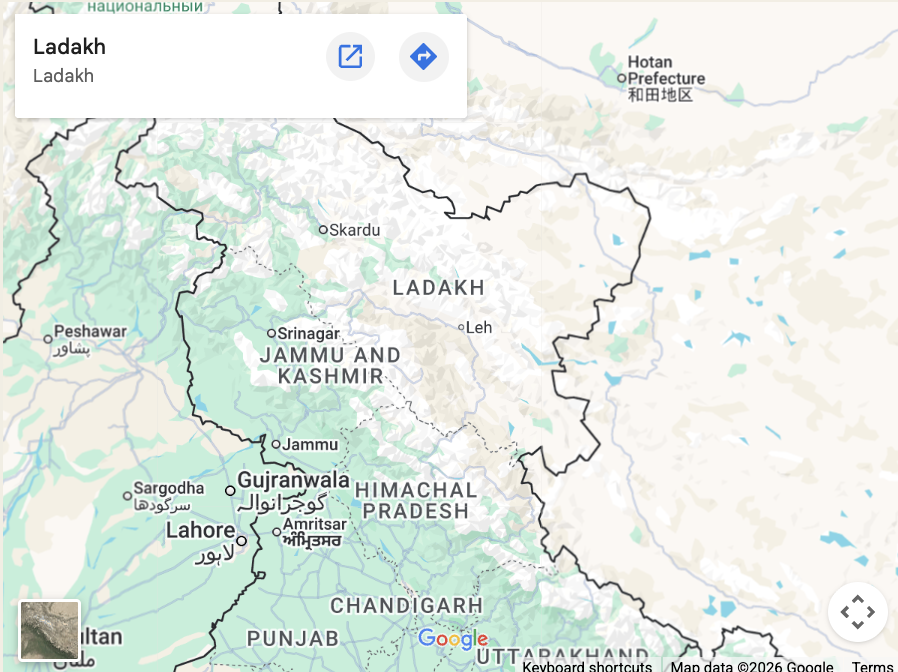
Srinagar: The redrawing of Ladakh’s administrative boundaries would restrict the Muslim majority to two districts while the Buddhists who are the second largest population group are going to be in a majority in the remaining five districts.
The decision to increase the number of districts from two to seven, first announced in 2024, has sparked allegations of gerrymandering against the Bhartiya Janata Party-led Union government which has struggled to contain the fire lit in Ladakh by its move to downgrade it into a Union territory without a legislature in 2019.
Amid speculations that the new districts would chip away parts of Karakoram and Changthang wildlife sanctuaries, the decision has also raised concerns over the dispossession of livelihood resources for pastoral people who have been grazing their herds in the Himalayan region for centuries.
According to a gazette notification issued by the Union government on Tuesday (April 28), Ladakh’s Muslim-majority districts of Kargil (80) and Drass (19) will comprise 99 revenue villages while the Buddhist majority districts of Sham (27), Changthang (24), Nubra (30), Leh (44) and Zanskar (26) will be made of 151 villages.
As per the Census 2011, Ladakh is a Muslim majority region with a population of 2.7 lakh which is made of 46.40% Muslims while Buddhists form the second largest religious group making up 39.65% of the population.
Earlier, Ladakh had only two districts, with the sparsely populated Leh district comprising 1.3 lakh people while the population of Kargil was estimated at 1.4 lakh, as per the 2011 Census.
Nubra, Sham and Changthang have been carved out from Leh while Zanskar and Drass have been redrawn from Kargil.
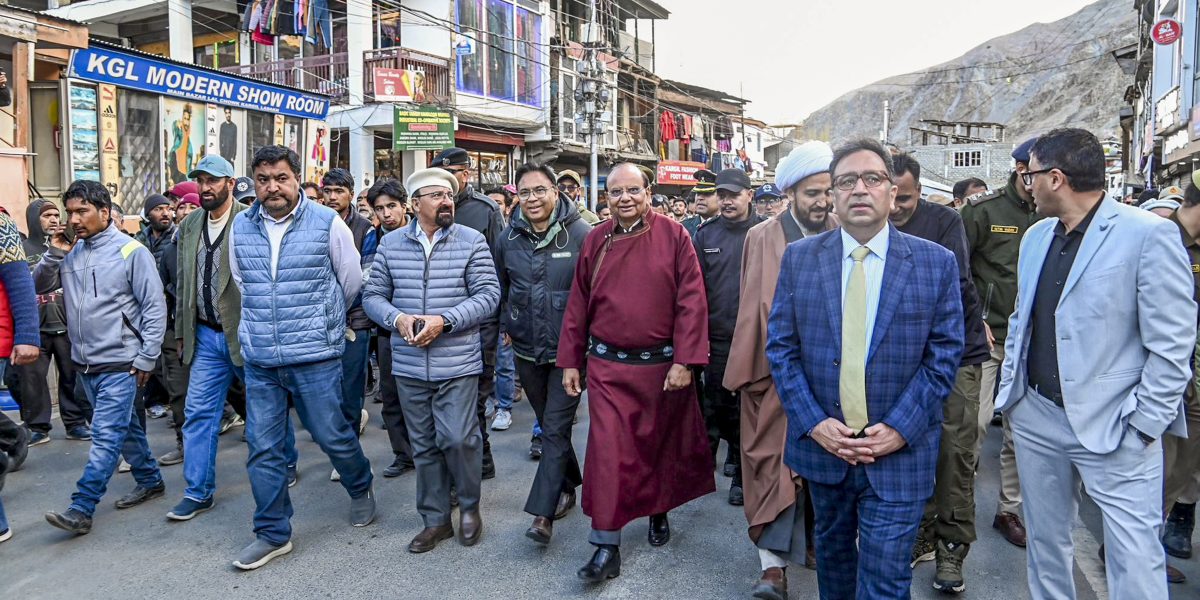
In a statement, Ladakh Lieutenant Governor Vinai Kumar Saxena said the “historic” decision “would usher in a new era of inclusive development in the Union Territory by ensuring an effective and efficient delivery of services at the doorsteps”.
“This transformative decision underscores the Government of India’s commitment to unlocking Ladakh’s immense potential and ensuring balanced, inclusive, and sustainable development across the Union Territory,” he said.
‘Fragmenting Ladakhi society’
However, Sidiq Wahid, a prominent Ladakhi academic and former vice-chancellor of the Islamic University of Science and Technology in Kashmir, said that the notification issued by the Union government does not spell out the overall structure of the Union territory, terming it as “one of the key shortcomings”.
“It has resulted in reactions ranging from trepidation to suspicion,” he said.
Wahid said that the decision could have the effect of fragmenting Ladakhi society by driving a wedge into“the remarkable unity that Ladakhi society has welded in the last five years”.
“It could also disassemble the unity between the Buddhist and Muslim communities because the fine print of the redistricting exercise reveals that the Muslims of Ladakh are reduced to being a minority in five of the seven new districts, and thereby with representation of less than two-thirds of Ladakh’s voice – a palpably undemocratic arrangement as the population of Buddhists and Muslims of Ladakh are almost equally split, with Muslims constituting a fractional majority”.
This story was originally published in thewire.in. Read the full story here.