
By Amisha Shrivastava
The Supreme Court on Monday (May 18) expressed reservations about the judgment delivered by a two-judge bench in January this year in Gulfisha Fatima v. State (which denied bail to Umar Khalid & Sharjeel Imam in the Delhi riots larger conspiracy case) saying that it did not properly follow the judgment delivered by a three-judge bench in 2021 in Union of India v. KA Najeeb which recognised long delay in trial as a ground for bail in cases under the Unlawful Activities Prevention Act.
The Court also expressed disapproval of the judgment of the two-judge bench delivered in 2024 in Gurwinder Singh v. Union of India for not applying KA Najeeb.
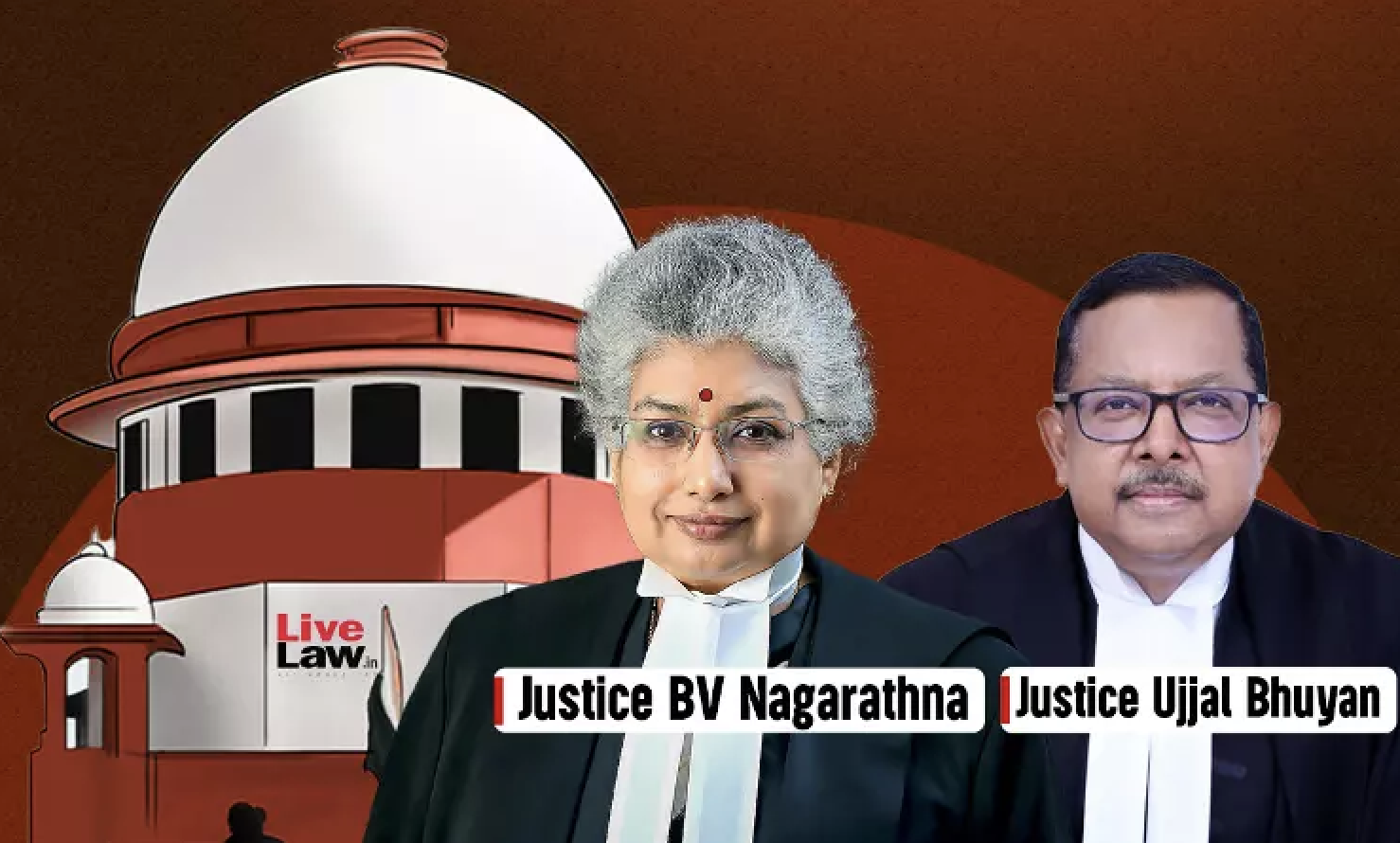
A bench comprising Justice BV Nagarathna and Justice Ujjal Bhuyan made these observations while allowing the bail plea of one Syed Iftikhar Andrabi, who has been under custody for over 6 years in a case under the UAPA for allegedly funding terrorism through supply of narcotics.
The judgment pronounced by Justice Bhuyan noted that the 3-judge bench in KA Najeeb had clearly held that prolonged incarceration was a ground for the Constitutional Courts to grant bail under UAPA despite the rigours under Section 43D(5) of the UAPA. However, the judgments delivered by two-judge benches in Gurwinder Singh and Gulfisha Fatima took a somewhat divergent view, Justice Bhuyan noted.
The bench observed that it was difficult to accept the views taken in Gurwinder Singh and Gulfisha Fatima. “A judgment rendered by a bench of lesser strength is bound by the law declared by the bench of greater strength. Judicial discipline mandates that such a binding precedent must either be followed or, in case of doubt, be referred to a larger bench. A smaller bench cannot dilute, circumvent or disregard the ratio of a larger bench,” Justice Bhuyan stated in the judgment.
The bench observed that the pre-Najeeb judgment in NIA v. Zahoor Ahmed Shah Watali (2019)cannot be invoked to justify prolonged pre-trial incarceration under UAPA. Hence, the attempt made in Gurwinder Singh to read Watali as laying down a general rule of bail denial in UAPA cases is difficult to reconcile with.
Also, the ‘two-prong’ test laid down in Gurwinder Singh was something which did not flow from either from the UAPA or the KA Najeeb decision. As per this two-prong test, bail will be considered only if the accused satisfies that there was no prima facie merit in the case. The Court stated that this was clearly contrary to the view in Najeeb that if there was a prolonged delay in trial, bail must be considered, regardless of other factors.
This story was originally published in livelaw.in. Read the full story here.