
By Amit Baruah
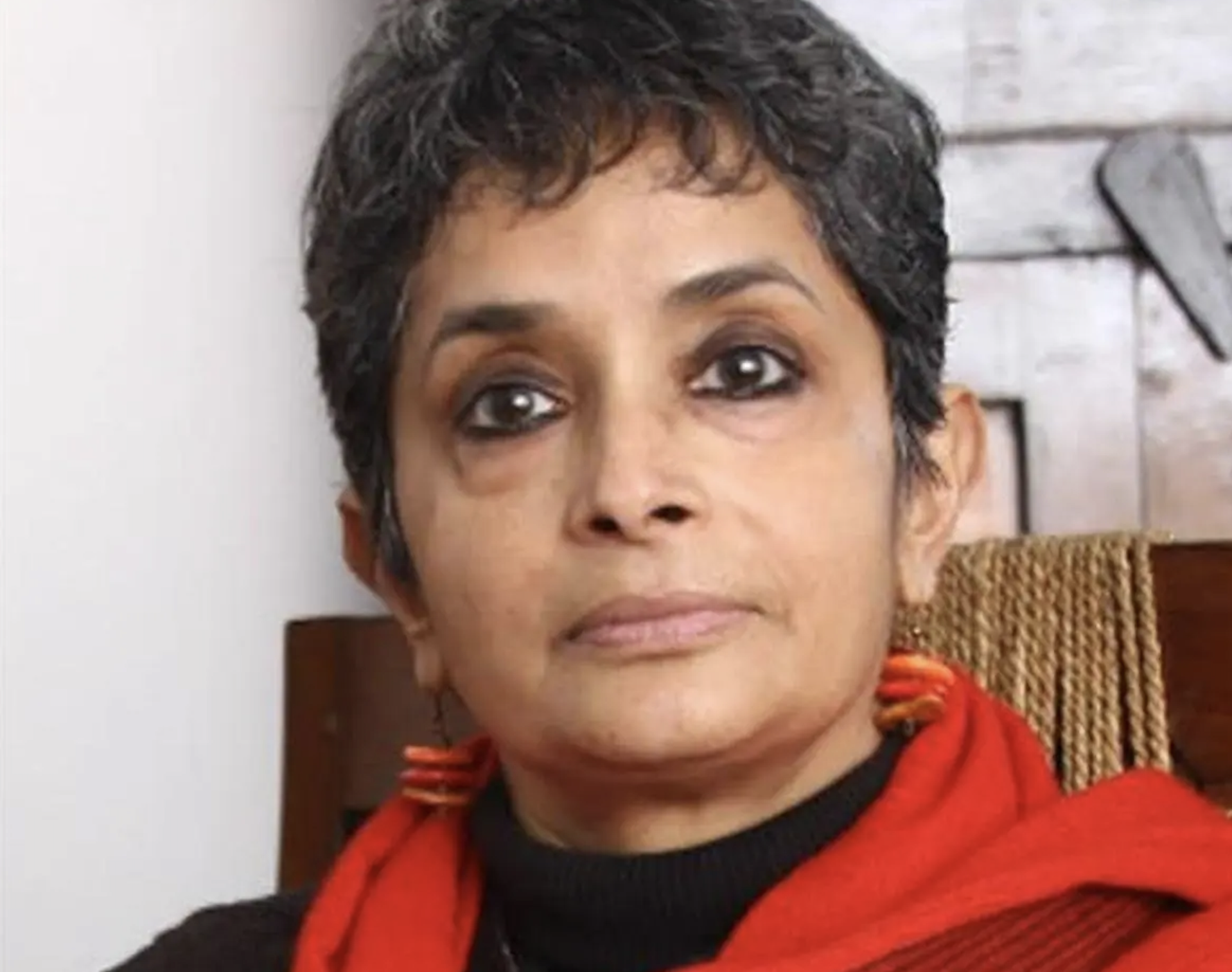
Newly-retired professor Nivedita Menon from Jawaharlal Nehru University (JNU) is an academic, feminist scholar, activist, as well as a much-loved teacher. In the latest episode of SpeakEasy, independent journalist Amit Baruah joins her to discuss JNU’s once democratic, secular, and intellectually vibrant space that is now shrinking, how academic roles have become instruments of control, how National Education Policy (NEP) advances Hindutva cultural control, as well as how the Vice Chancellor–centric governance model makes universities uniquely susceptible to ideological takeover once political power is consolidated.
Edited excerpts:
You seemed emotional when students raised those slogans—‘Jai Bhim Lal Salaam’—on your last day. What were your feelings?
It was spontaneous on their part. The core group had organised a lovely farewell where they weren’t speaking about me, but about the course and what they learned from the readings. I was walking out to my car, and the slogan suddenly started. And yes, I did become emotional. That moment captured something for everybody. It captured a moment of hope and resistance, and young people and the future. That sense of hope and freedom that that moment captured and what the university can be, that’s what was meaningful for everybody.
The fact is, there are tens of thousands of committed, brilliant teachers in this country. These teachers mean something; they do something. What was special about this moment? There were two things. One is that JNU has been under such a horrific attack since 2016. Umar Khalid is still in prison, as is Sharjeel Imam (activist known for his allegedly inflammatory speeches made during anti-Citizenship Amendment Act (CAA) protests, which led to his arrest under sedition). These people are still in jail without trial for five years. JNU has been under attack, and the faculty has been under attack. I have personally been under attack, among many others. So, it was like a moment of vindication, a moment of hope, a moment of resilience and joy also. It was the kind of tears that come to your eyes when your team wins. I do not enjoy sports at all, but here our team is the team that believes in a secular India, in an India that is just and fair. That’s our team.
You referred to JNU being under attack. When you joined in 2008, what was JNU then versus now?
I don’t want to romanticise anything pre-2014, nor India, nor JNU. There were many issues—faculty posts were not filled, and reserved faculty posts in particular. But what has radically changed after 2016, when the new Vice Chancellor, Jagadesh Kumar, took over, was that we began to understand suddenly that this is what an authoritarian fascist regime looks like. Between 2014 and 2016, the kinds of things that happen routinely on campus—9 pm hostel mess talks. Different groups would invite different people from all over Delhi.
Every day at 9 pm, some political group or the other, right wing, left wing, Ambedkarite, whatever group, there would be these talks in the mess that would go on for an hour, or an hour and a half, discussions. Faculty were selected through certain procedures. Selection committees, panels passed through certain kinds of procedures before they were finalised. Deans and chairs were appointed by rotation, by seniority. What this means is that nobody had a fiefdom. It was a democratic process. You’re not seen as a powerful person. Nobody stands up when you enter the room because you’re a colleague who’s taken on a responsibility, not power.
What happens after 2016 is that all these things are dismantled. All hostel talks have stopped. Now, only talks that are cleared by the administration can get space inside any seminar room. You will notice that in all student group talks, the venue is written as “outside SSS1, outside SSS2”. We talk on the stairs outside; they don’t give us room inside. At every event, security guards are around filming. If you ask them why they are being filmed, they say it’s our job. And you know, it’s their job. They have to get their salary. So we just let them do it. A number of events have been cancelled. The West Asian Studies centre had invited two ambassadors from West Asian countries, and that event was cancelled at the last minute because there was a feeling that Palestine would be talked about. There is a hard kind of censorship going on in terms of any kind of conversation.
Two, the appointment of Deans and Chairs is at the pleasure of the Vice Chancellor. Literally, the Vice Chancellor picks and chooses. So, now it’s a post of power. It’s a post where you have to please the administration. Faculty are now selected by the Vice Chancellor directly. There is a selection interview board, and there is a selection committee, but nobody from the centre is usually on the selection committee. Normally, the chair would be present, that of the centre. So, now the chairs are not present. One of the first things Jagadesh Kumar did was to introduce the idea that the Vice Chancellor can introduce people into selection committees. And that was the beginning of the end, because you have people who are there simply to stamp. So it’s very evident that faculty appointments for the past many years, since 2016, have been decided in advance.
Are you saying these are ideologically loaded faculty members being hired? So, 10, 15 years down the line, JNU will be dominated by right-wing Hindu teachers?
Hindu is not the point. Hindutva and RSS are the point. It’s not the religious. They’re organisationally linked. Many of them were in the ABVP [Akhil Bharatiya Vidyarthi Parishad], many of them were students of JNU in the ABVP, and then they’re appointed as faculty. It’s a very clear ideological agenda. And they seem to think if the left did it, it was okay, and when we do it, it’s an issue. No, when the Left left, the Left didn’t appoint people from the Left. They appointed intellectuals. People were not selected for their Left ideology. They were selected for their scholarship, for their books, for their writing. But now the people who are coming in have no qualifications other than that they owe allegiance to the Sangh. And they make it very clear. They’re very open about it. That’s their job. They’ve been brought in to do this.
This story was originally published in frontline.thehindu.com. Read the full story here.