


Kolkata: West Bengal Chief Minister Suvendu Adhikari invoked the religion-coded expression “Friday people” while announcing the first application of the state’s new anti-Goonda law against people allegedly involved in violence during the July 24 student-youth march in central Kolkata.
The march, organised by eight Left student organisations and joined by the West Bengal unit of the Cockroach Janata Party and other groups, was called to press for Union education minister Dharmendra Pradhan’s resignation, the abolition of the National Testing Agency and accountability for the NEET paper leak. Trouble broke out after the largely peaceful procession reached Dorina Crossing. There, shoes, bottles and bricks were thrown at police and several journalists were reportedly targeted.
The Wire spoke to several journalists present at the demonstration who said reporters, including women journalists, were heckled and abused. Videos from the protest showed men surrounding and hounding reporters, obstructing live broadcasts and making obscene gestures. Some journalists suffered physical injuries.
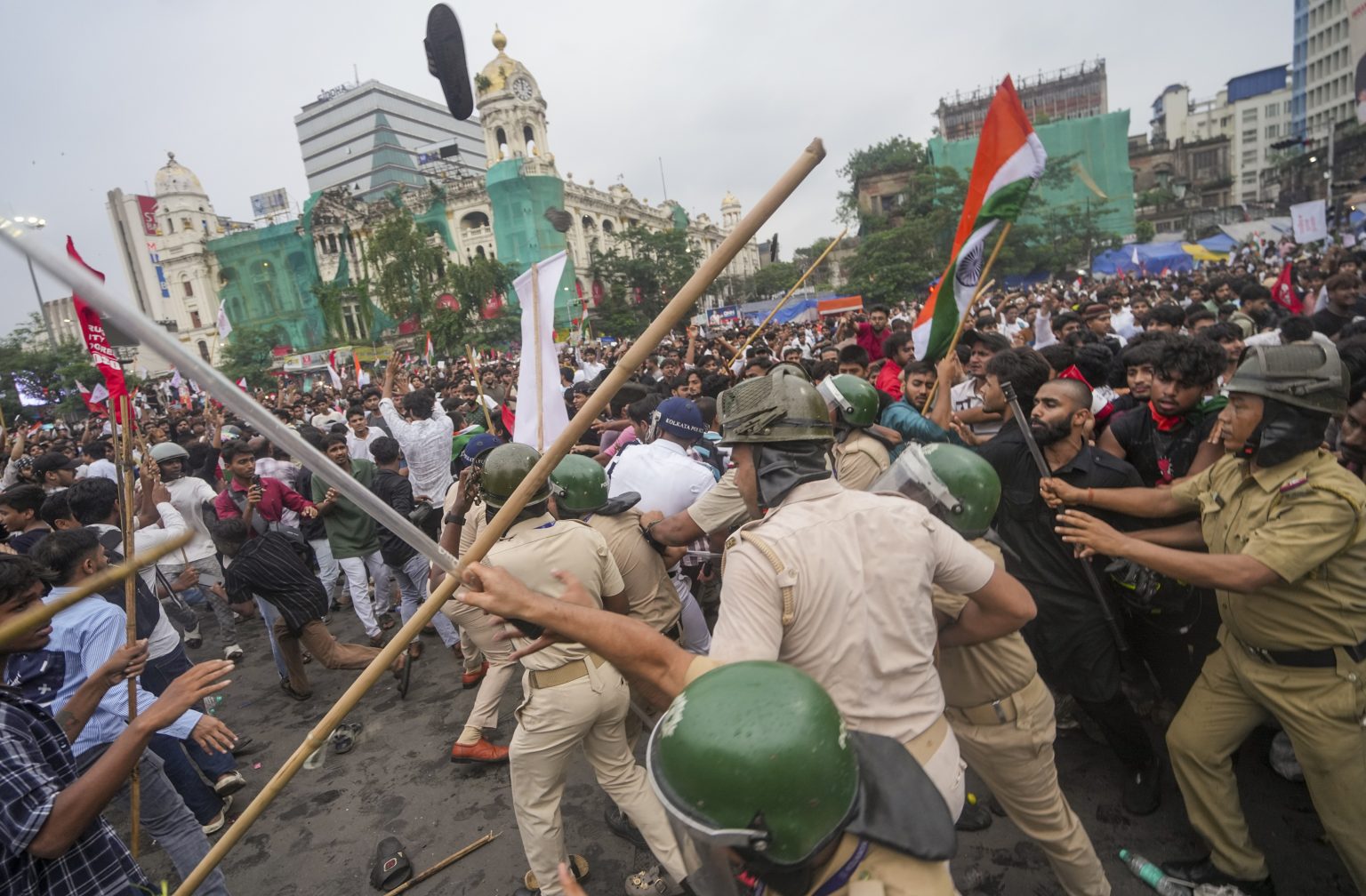
The attacks occurred against a backdrop of growing public anger towards sections of the television media accused of disseminating erroneous, sensationalised or communally inflammatory reports. Protesters cited the conduct of individual reporters as examples of why some media organisations had lost public trust.
‘Protesting students who helped us immensely’
An audio-visual journalist present at the scene, however, told The Wire that the group responsible for the violence did not appear to have an identifiable political character.
“The mob did not appear political to me. While we were being pushed and jostled, some political workers and students came to rescue us. They formed a protective ring around us. We cannot thank them enough. They also said that a group of young men had come from outside and were creating trouble beyond their control,” the journalist said, asking not to be named.
“I want to express my gratitude to the protesting students who helped us immensely, surrounded us to keep us safe and apologised for the entire incident,” he added.
This story was originally published in thewire.in. Read the full story here.