
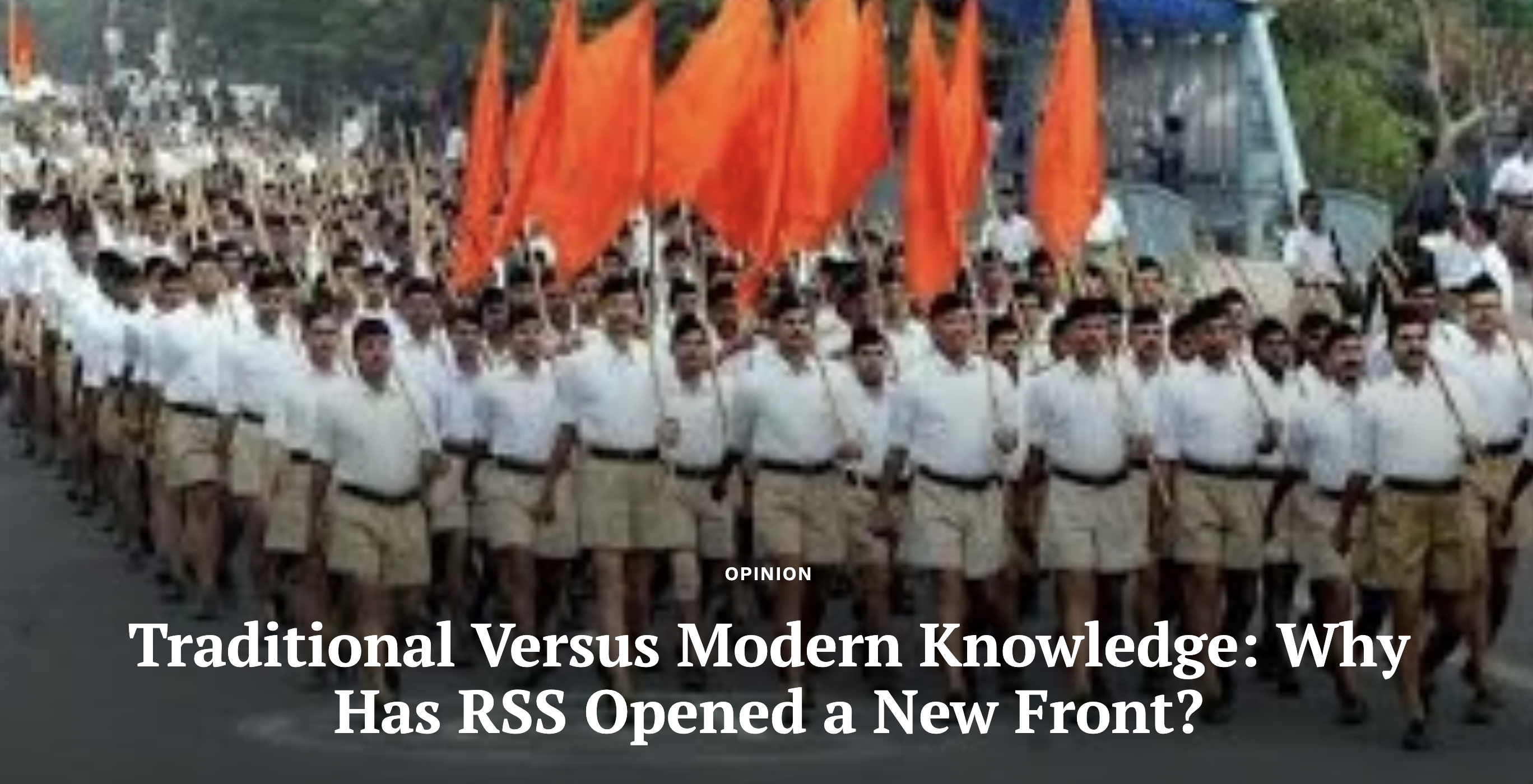
THE RSS ideologues and their cohorts have so far focused on issues like “evil Muslim rulers” and their atrocities on Hindus, such as destroying temples and forcing them to convert to Islam. As per this narrative, India had a golden period in the past and Muslim invaders brought in evil practices. Recently, Hindutva thinkers have also started focusing on the evils of British colonialism.
In a recent speech, Prime Minister Narendra Modi said that we should resolve to free ourselves from colonial mindset in the next 10 years. In ten years, it will be 200 years when Lord Macaulay (1800-1859) introduced the pattern of education in English. As per Modi “…Macaulay project was to reshape Indian thought by dismantling indigenous knowledge systems and enforcing colonial education”. Modi goes on to state that Macaulay’s crime was to create Indians “who are Indians in appearance but British in thought.” This system broke India’s self-confidence and introduced a sense of inferiority. (Indian Express November 18, 2025)
Modi criticised Macaulay’s intention to destroy indigenous knowledge systems and impose colonial education. Interestingly, this criticism comes from an ideology that kept a safe distance from the anti-colonial struggle led by Mahatma Gandhi. While Modi’s camp blames Macaulay for our shortcomings, Dalit thinkers like Chandrabhan Prasad praises Macaulay’s contribution, saying it laid the foundation for Dalit and marginalised communities’ struggle for dignity and equality.
Modi and his ilk see Macaulay’s legacy as a linear, imposed culture. However, modern education brought liberal values and opened doors to knowledge for all sections of society, including women and Dalits. These marginalised sections were deprived of education as this luxury was restricted exclusively for the upper caste.
Traditional knowledge systems were controlled by privileged groups, limiting access to knowledge and power. The knowledge propounded by the likes of Sushrut, Aryabhata, Brahmagupta, Lokayat stream and Bhaskar had a tremendous contribution in pushing forward society in the direction of enlightenment. Macaulay’s education system, despite its limitations, created a class of nationalists who challenged colonial rule.
True, Macaulay had vested interests in producing the clerks and other sections who could serve the British empire. It is also true that the likes of Rudyard Kipling tried to undermine the Indians when they glorified the British by terming their mission here as “white man’s burden”. English education spread regional languages, and many notable writers contributed to their development. The Indian National Congress, led by Gandhi, Patel, and Nehru, all products of this system, fought against colonialism. The benefits of this system were summarised in Nehru’s famous “Tryst with Destiny” speech.
Did English suppress the regional languages? As a matter of fact, education in general promoted regional languages as well. Tilak (Maratha) and Gandhi (Navjivan) started their newspapers in regional languages. The doyens of regional languages contributed in this period also, Rabindranath Tagore and Munshi Premchand, to name just a few.
This story was originally published in clarionindia.net. Read the full story here.