


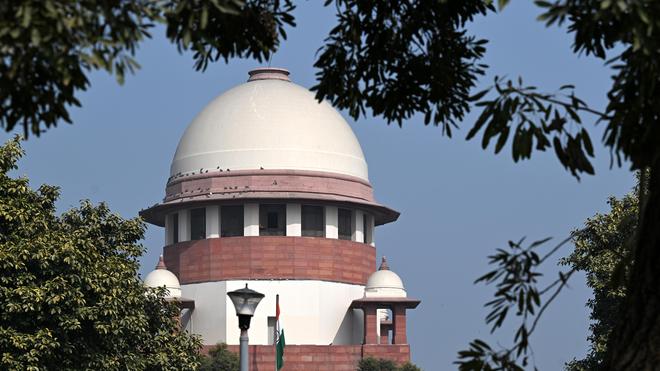
Prominent activists and religious leaders on Tuesday (January 20, 2026) urged the Supreme Court to recognise hate speech as a “constitutional tort” rather than a mere disruption of law and order. They contended that its inherently “discriminatory” character strikes at the core of constitutional guarantees.
A constitutional tort is a judicial remedy through which the State can be held vicariously liable for the actions of its agents when they violate constitutional guarantees.
A Bench of Justice Vikram Nath and Justice Sandeep Mehta was hearing a batch of petitions highlighting the rise in hate speech incidents and seeking directions to regulate religious gatherings and congregations that promote such practices. The Bench reserved its order and directed the parties to file their written submissions within two weeks.
Appearing for activist Syeda Hameed and academic Alok Rai, advocate Shahrukh Alam submitted that hate speech could not be reduced to a routine policing concern. “Hate speech must be viewed beyond the prism of law and order, given its discriminatory impact. Treating it as a constitutional tort would ensure greater accountability,” she told the court.
Echoing these concerns, advocate Nizam Pasha, appearing for journalist-petitioners Shaheen Abdullah and Qurban Ali, pointed out that despite the Supreme Court’s October 21, 2022, order directing States to register suo motu FIRs against those delivering hate speeches that incite communal violence, there had been little change on the ground.
“Such speeches are often delivered by habitual offenders. There is clear prior knowledge of the nature of these religious congregations, yet there is persistent inaction by State investigating agencies,” Mr. Pasha said.
This story was originally published in thehindu.com. Read the full story here.