
By Report: Aakriti Handa | Development: Naman Shah | Design: Aroop Mishra
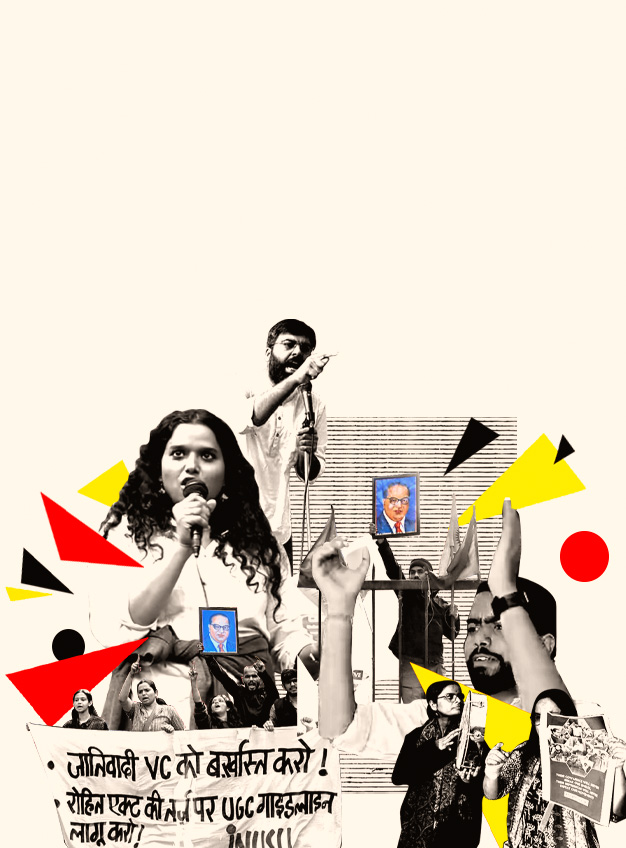
Even as Indians witness tensions escalate in West Asia with keen curiosity, they must also turn their gaze towards growing clashes within the country, particularly at its higher education institutions. The second half of February saw student groups clash with each other and with security forces in central universities; vandalise a private university; and form a human chain to allow fellow Muslims to offer prayers safely.
As a consequence of this, students were injured and hospitalised; charged under serious offences, detained, arrested and jailed; while Delhi University enforced a month-long ban on protests on campus— a move described as “unprecedented and undesirable” by the DU Teachers Association.
The common theme running through these clashes is the ideological polarisation between student groups— particularly the Left-affiliated All India Students Association (AISA) and the RSS-affiliated Akhil Bharatiya Vidyarthi Parishad (ABVP)— as academic or cultural events quickly turn into political flashpoints.
Student protests were triggered either in response to a policy decision or debates over national identity, caste, religion, or historical interpretation. Instead of internal mediation or disciplinary action, however, central universities responded through deployment of police and paramilitary forces, First Information Reports (FIRs), arrests, notices and protest bans. At the same time, external political actors were often seen interfering with campus conflicts and deepening ideological fault lines.
In other words, as universities are transforming into ideological battlegrounds, student protests are increasingly being treated as law and order issues rather than democratic dissent. The net effect is an assertive crackdown on debate and academic freedom.
The stifling of academic freedom also manifests when lectures by eminent personalities, including veteran actor Naseeruddin Shah, are cancelled last minute or National Award-winning filmmaker Anand Patwardhan is denied entry by a central university. In fact, India ranked 156th on a scale of 179 countries in the Academic Freedom Index report published last year.
This story was originally published in thequint.com. Read the full story here.