


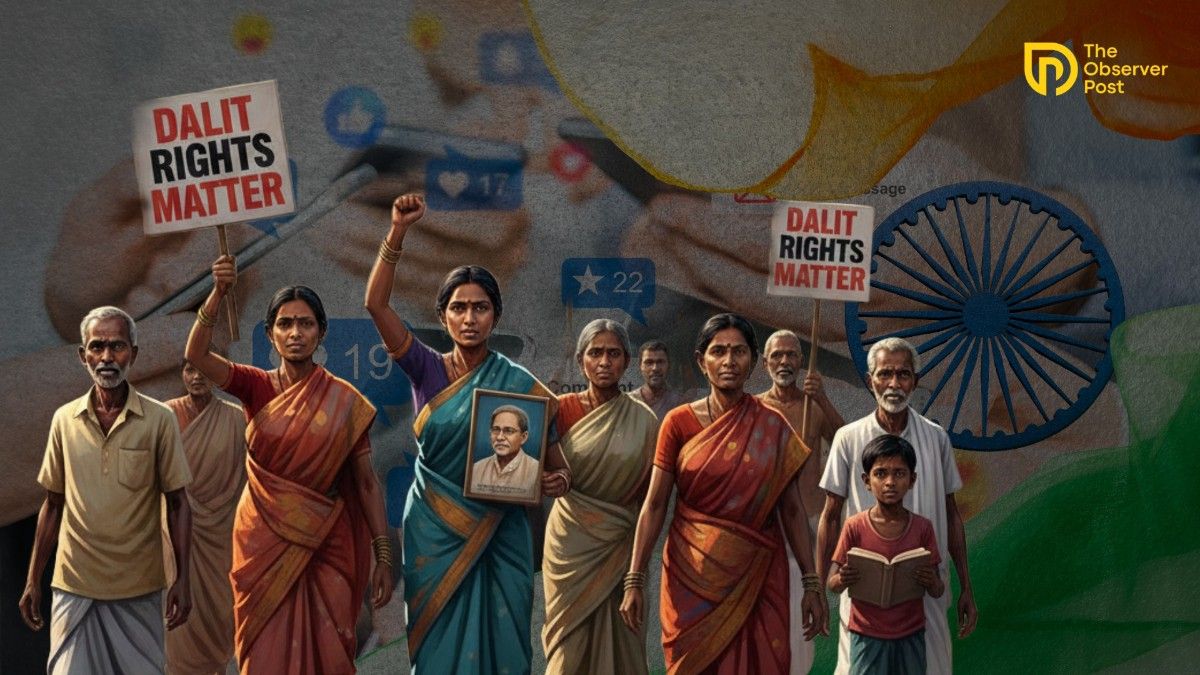
A new study by the University of Bath School of Management reveals that social media, often celebrated as a tool for giving everyone a voice, can actually reinforce inequality and deepen the marginalisation of communities such as Dalits in India.
Dalits, formerly called “untouchables” and legally recognised as Scheduled Castes, make up over 200 million of India’s 1.47 billion population. Historically subjected to social and economic oppression, Dalits were confined to tasks considered “polluting,” including leatherwork and animal slaughter. Despite progress in employment across public services, banking, railways, and private industries, discrimination and violence remain widespread.
“Progress is painfully slow. Discrimination and violence against Dalits continue, and while the Dalit middle class is growing, social media has unfortunately amplified these problems instead of reducing them,” said Dr Pardeep Attri, lead researcher of the study.
How Social Media Excludes Dalits
The research, titled “You Belong to Gutters, Not Facebook or Twitter: Recovering Dalit Histories from the Shadows of Social Media”, highlights how online platforms shape, restrict, and sometimes erase the experiences of marginalized communities. The study identifies three major ways Dalits face exclusion online: being unseen, unheard, and unspoken.
Dalit histories and contributions are often invisible due to biased algorithms. Platform reporting systems frequently fail to protect them from harassment, leaving many unable to raise concerns meaningfully. Constant trolling, abuse, and discrimination force several users into silence or withdrawal.
Dr Attri explained, “There is an urgent need for moderators who understand the Dalit community and can address trolling effectively. Much of mainstream media and online moderation comes from dominant caste perspectives, which worsens the exclusion.”
Digital Visibility Brings Risks
The study found that simply being visible online does not guarantee empowerment. On the contrary, a higher online presence often exposes Dalits to greater harassment and attempts to discredit or erase their narratives. Many users feel they have little control over how their histories and contributions are represented.
This story was originally published in theobserverpost.com. Read the full story here.