


By Tarushi Aswani
Amreli/Banaskantha (Gujarat): “Their home is locked. They left the village after what happened in November last year. They don’t talk to anyone now,” said Imran Pirzada, a local of Mota Khakivad village in Amreli town.
Pirzada is referring to the Solanki family – three members of which were given life sentences for ‘cow slaughter.’
On November 6, 2023, the police raided the home of the two brothers Kasim and Akram, and their uncle Sattar, allegedly after receiving a tip-off. Police claimed to have found beef, remains of a slaughtered calf and slaughter equipment.
On November 11, 2025, the Amreli Sessions Court convicted them under the Animal Preservation Act, and ordered them to pay a combined fine of Rs 18 lakh.
Holy cow and hate crimes
On February 25, two Muslim men were brutally attacked by cow vigilantes over the allegation that they were transporting buffaloes in Gujarat’s Gandhinagar. The attackers had rammed their truck into the vehicle, causing serious injuries to the men. No dead cattle was found on the scene.
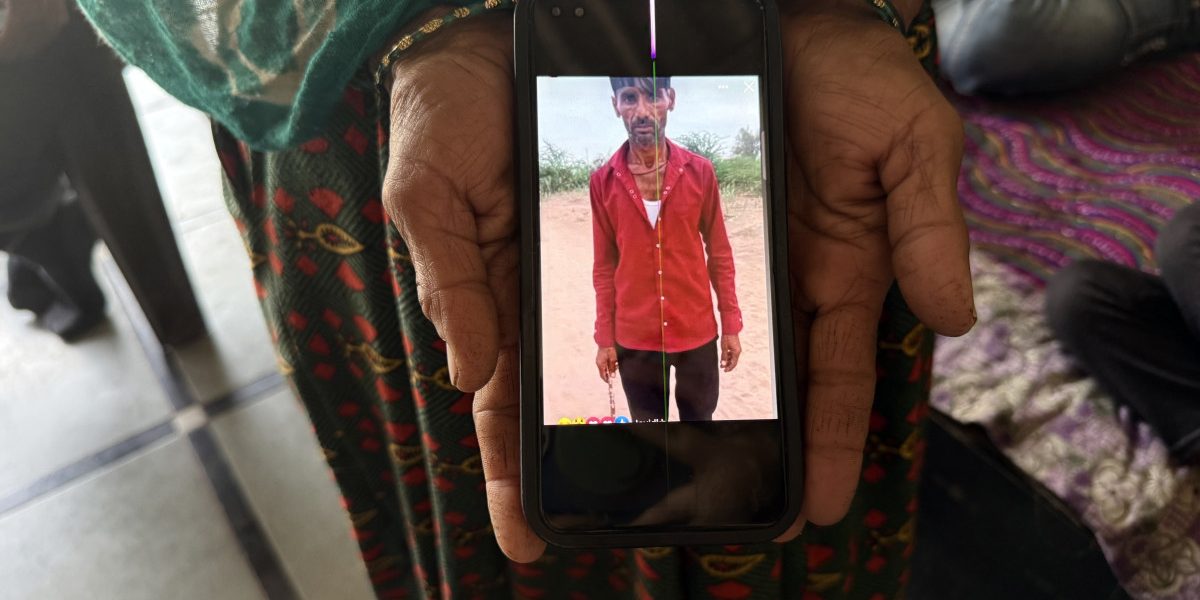
“It reminded me of what happened to my husband,” said Jeeviben Khan, the widow of Mishri Khan, who was beaten to death in the Deesa village of northern Gujarat’s Banaskantha district in May 2024 by iron rod-wielding men, who claimed to be ‘gau rakshaks’ or cow protectors. Khan did not have dead cattle or cattle remains on him either. He was only out to deliver two buffaloes to his sister after purchasing the animals from a Banaskantha cattle market. The accused men were booked for murder, wrongful restraint, criminal intimidation and criminal conspiracy, but later most of them were released. Out of the five accused, one continues to be in prison and four were let out between six and seven months after being jailed in May 2024.
Jeeviben, who is partially blind and a single mother to four, is afraid of letting her kids out of their impoverished home. That most of those involved in the crime roam free compounds her fears. “I survive off of whatever my relatives contribute. Sometimes, we don’t eat when there’s no money. Even today, my youngest daughter has a high fever, but I don’t even have the auto fare to take her to the doctor. They killed our breadwinner,” Jeeviben said when this reporter visited her in the Nava Sesan village of Banaskantha in mid-March.
This story was originally published in thewire.in. Read the full story here.