
by India Tomorrow
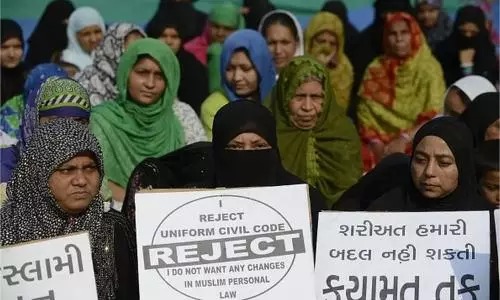
AHMEDABAD: A press statement issued by the Gujarat Muslim Hit Rakshak Samiti has raised serious constitutional and legal concerns over the recently passed Uniform Civil Code (UCC) Bill by the Gujarat Legislative Assembly, which is currently awaiting governor’s assent.
The organisation has argued that the proposed law, though termed as a Uniform Civil Code, appears to diverge from the constitutional vision outlined under Article 44 of the Constitution of India. According to the statement, the Bill raises significant questions regarding legislative competence, constitutional validity, and infringement of fundamental rights guaranteed under Part III of the Constitution.
The statement emphasized that Article 44 forms part of the Directive Principles of State Policy and is not enforceable by courts, unlike fundamental rights. It noted that courts have historically left the implementation of a UCC to the legislature, as Directive Principles are non-justiciable.
The Samiti pointed out that a UCC must apply uniformly to all citizens across India. However, it argued that the Gujarat legislation applies only within the state and does not cover all communities uniformly, as it excludes Scheduled Tribes and groups protected by customary rights under the Constitution. On this basis, the organisation questioned whether the law can legitimately be termed a “Uniform Civil Code.”
The statement also referred to the Constituent Assembly Debates, noting that B. R. Ambedkar had assured that any such code should not be imposed without public consent. It cited the findings of the 21st Law Commission of India, which had previously stated that a UCC was “neither necessary nor desirable” at this stage, while noting that the 22nd Law Commission of India has not issued a conclusive opinion.
The Samiti further questioned the transparency of the consultation process led by a committee headed by former Supreme Court judge Ranjana Prakash Desai, stating that its findings have not been made public despite submissions opposing the UCC.
Drawing parallels with the UCC law enacted in Uttarakhand, which is under judicial scrutiny in the Uttarakhand High Court, the proposed law in Gujarat also imposes majoritarian norms and restricts religious practices, particularly those followed by Muslims under Islamic personal law, including matters related to marriage, divorce, and inheritance. Several religious beliefs and practices as mandated by Islamic Scriptures i.e. the Quran and Hadith, are now prohibited and made punishable under the proposed law. In their place, Hindu beliefs and practices have been imposed and Muslims would be forced to follow them.
The organisation further alleged that the Bill infringes upon fundamental rights such as religious freedom and equality, arguing that implementing a Directive Principle at the cost of fundamental rights undermines the constitutional framework.
Additionally, the timing of the Bill—just months ahead of local body elections—was described as politically motivated, aimed at appealing to majority sentiments.
This story was originally published in indiatomorrow.net. Read the full story here.