
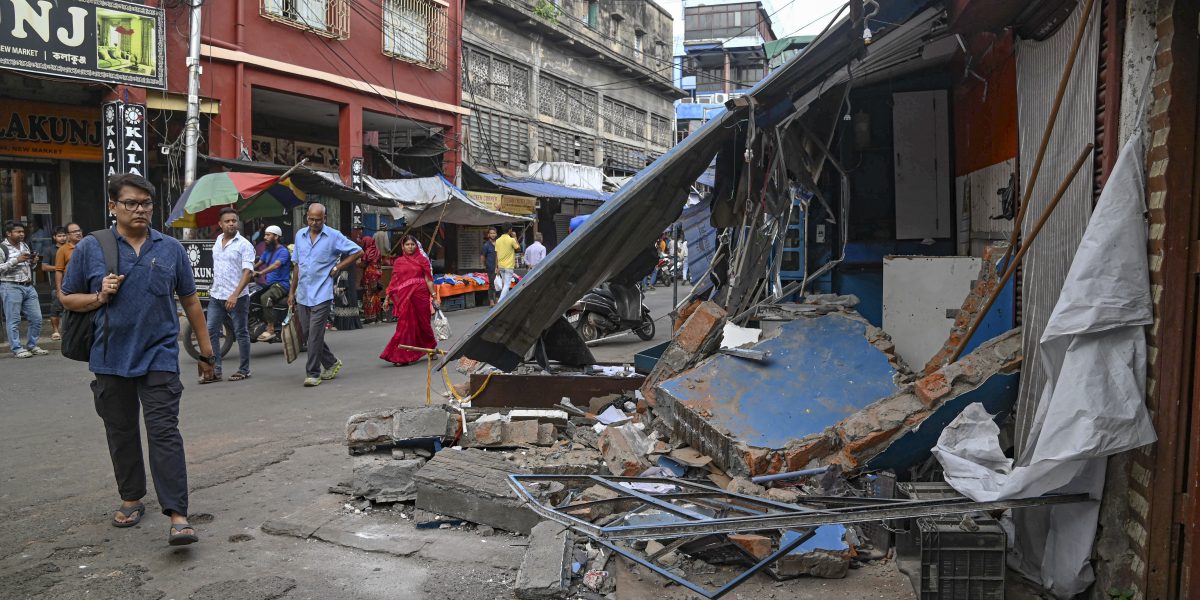
New Delhi: A three-judge Supreme Court bench led by Chief Justice of India (CJI) Surya Kant on Thursday (July 16) declined to hear a batch of pleas alleging contempt of the top court’s November 2024 ruling against “bulldozer justice,” directing the petitioners to approach their respective high courts instead.
Senior advocates Sanjay Hegde, C.U. Singh and Huzefa Ahmadi, appearing on behalf of the plaintiffs, urged the court to rule on the cases directly rather than defer to high courts, citing specific instances of the 2024 judgment being flouted, including a fruit stall demolition and a mosque razed despite a status-quo order.
The bench, which also included Justices Joymalya Bagchi and V. Mohana, said the pleas raised disputed questions that needed case-by-case adjudication. Additional solicitor general (ASG) Aishwarya Bhati agreed with this view, observing that the petitions came from across the country. Justice Bagchi further noted that the 2024 ruling cannot be read “as a statute” and should be divorced from the facts of the case.
Referring to contentious practice utilised by state governments, especially those governed by the Bharatiya Janata Party (BJP), where authorities demolish homes and premises of individuals under the garb of anti-encroachment drives, Justice Bagchi remarked that “bulldozers will have to roll” when a “comfortable corruption” between municipal officials and illegal encroachers undermines the rule of law, reported Indian Express. Simultaneously, he cautioned that the same enforcement must not become a tool for targeting individuals or for overriding the presumption of innocence.
What did the petitioners’ legal counsel argue?
Ahmadi argued that the court should still step in wherever violations were “egregious” and “patently evident from affidavits,” offering to demonstrate the same within 15 minutes if given the chance, according to LiveLaw. His petition concerned the alleged illegal razing of mosques in Somnath. The demolition had reportedly followed a local politician’s letter asking “how can we have Asia’s largest mosque in this particular state.” Ahmadi insisted the structure in question did not stand on public land.
As per the LiveLaw report, Singh, arguing a contempt case from Maharashtra, told the bench that several such demolitions were preceded by public declarations from local politicians announcing “bulldozer action” in advance. This sequence, he said, pointed to punitive intent rather than routine enforcement. Singh further claimed that the state’s own affidavit in his client’s matter showed that the process mandated by the Supreme Court had not been adhered to and that the hastiness of the demolition, combined with celebratory political statements afterwards, made the punitive character of the action self-evident.
This story was originally published in thewire.in. Read the full story here.