
Ankit Pandey* was rushing to catch a train from Mumbai’s Malad station last month, when a sight halted him in his tracks. From the railway bridge, he could see a group of men offering namaaz (prayers) just outside the railway platform.
Pandey, 22, a worker in the Hindutva outfit Bajrang Dal, was incensed. He shot a 33-second video of the men praying, with his voiceover — “Will a Hindu be allowed to do this?” He added a song, a menacing chorus with pulsating beats, and uploaded it to Instagram through the local account of a leaderless Hindutva outfit called the Sakal Hindu Samaj (SHS).
He tagged four other similar accounts with a combined following of over 3.7 lakh followers. It took him less than 10 minutes to shoot and upload. But overnight, the post blew up.
Tens of thousands shared it and agreed with his outrage. Senior Bharatiya Janata Party (BJP) leaders latched on, and in 24 hours, Railways authorities had booked three people for ‘trespassing railway property’. Pandey’s post still remains on Instagram — with over 54,000 likes and more than a million views.
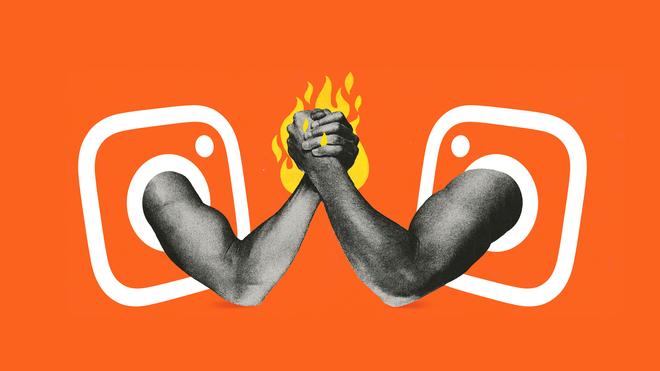
Once a hub for vacation photos and aspirational lifestyle content, Instagram in India is now evolving into a space filled with political messaging, ranging from cheeky memes to hate-driven propaganda. Accelerating this shift is parent company Meta’s decision last year to push more political and news content towards users, including content from those they don’t follow. “We may recommend political content from accounts people don’t already follow based on personalised signals. If you want to see more or less political content, you can change your Political Content Control setting at any time,” says a Meta spokesperson.
India is Instagram’s largest market in the world, with around 481 million users. But with the platform becoming the mainstay of India’s political campaigning, there are also concerns. While disinformation through AI-generated content and hate-filled videos continues to flourish, critical voices might be getting silenced.
Such a trend holds immense significance for India. After all, in both neighbouring Nepal and Bangladesh — the sites of Gen Z protests which dislodged governments — Instagram emerged as a key source of information for protesters. Apart from posting content that stoked the protests, users in both countries also leveraged it to coordinate among themselves and create safe channels of communication.
This story was originally published in thehindu.com. Read the full story here.