
Since coming to power, the Suvendu Adhikari-led Bharatiya Janata Party (BJP) government in West Bengal has relied on a predictable, albeit dangerous, playbook. The administration frequently reframes civilian protest as a security threat and dissent as radicalism, shifting scrutiny away from government incompetence to the religious identity of those agitating.
Two major flashpoints in July 2026 exposed both the danger and the limits of this strategy. In each case, public anger arose from a concrete governance failure. In each, the government attempted to replace accountability with communal suspicion. In each, the narrative eventually unravelled.
Kolkata protests against NEET paper leak
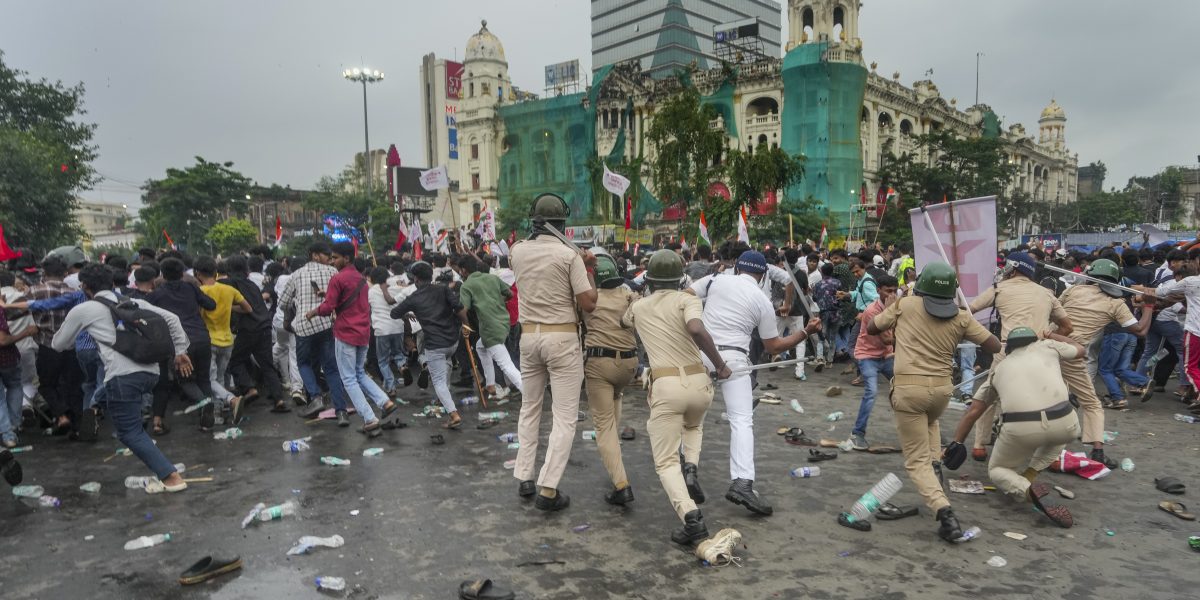
The most glaring example of this collapsing strategy occurred during the Kolkata protests over the national NEET-UG paper leaks. On July 24, the demonstration turned violent as protesters clashed with police, who responded with baton charges. Several journalists were reportedly assaulted and heckled.
These were legitimate questions being asked by the students, directed at the Union government. Instead, chief minister Adhikari sought to transform an education-related protest into a communal confrontation.
He described the agitators as foreign-funded “Islamic fundamentalists,” emphasised that the protest had taken place on a Friday coinciding with the Hindu festival of Ulto Rath and called the protesters “shukrobariya,” or “Friday-goers,” to associate them explicitly with Islam. He then warned that “three generations of them” would rot in prison. A national movement over an examination scandal was thus recast as a religious threat.
That narrative did not survive for long. After the Narendra Modi government agreed to withdraw cases against NEET protesters across the country, all those arrested in Kolkata were granted bail within three days. The rapid retreat exposed the gulf between the chief minister’s inflammatory rhetoric and the eventual legal outcome. What had been presented as a dangerous extremist conspiracy ended with the accused walking out on bail almost immediately.
This story was originally published in thewire.in. Read the full story here.