
By Maktoob
The All India Muslim Personal Law Board (AIMPLB) has strongly opposed the Uniform Civil Code (UCC) recently passed by the Gujarat Legislative Assembly and earlier implemented in Uttarakhand, calling it “constitutionally flawed, legally untenable, and fundamentally violative of religious freedom and civil liberties.”
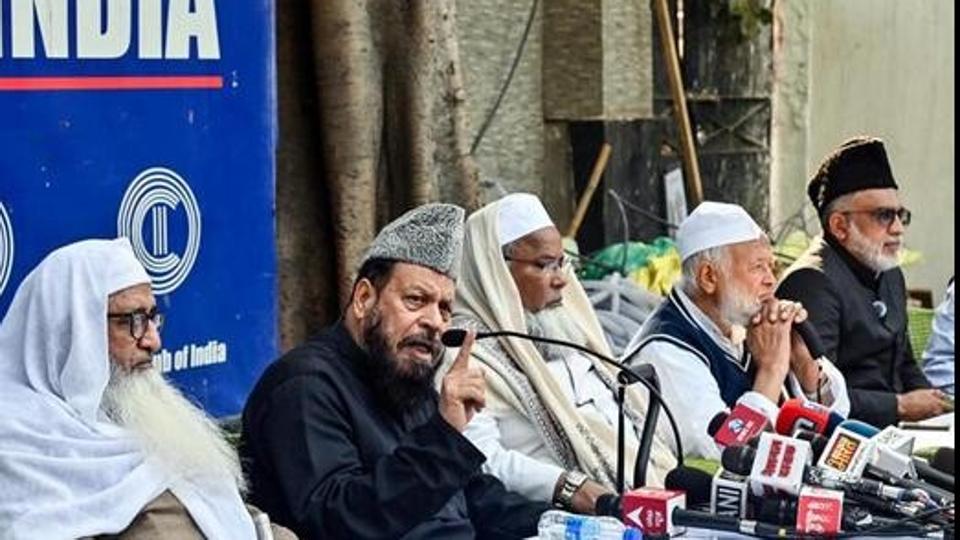
Addressing the media in New Delhi, senior representatives of the Board said the Gujarat UCC Bill, currently awaiting the Governor’s assent, raises “grave constitutional, legal, and democratic concerns” across the country.
They argued that despite being labelled as a “Uniform Civil Code,” the legislation does not conform to constitutional principles and infringes upon fundamental rights guaranteed under Part III of the Constitution, including religious freedom, equality, and personal liberty.
The Board stressed that the UCC is mentioned under Article 44 as a Directive Principle of State Policy and is not directly enforceable like fundamental rights, noting that any such code must be uniformly applicable across the country.
They pointed out that the Gujarat law neither applies nationwide nor uniformly within the state, as Scheduled Tribes and other protected communities have been exempted.
“This legislation cannot be described as a genuine Uniform Civil Code. The nomenclature itself is misleading and deceptive,” they said, adding that, as reflected in Constituent Assembly debates, Dr. B. R. Ambedkar had assured that no such law would be imposed without public consent.
It also noted that both the 21st and 22nd Law Commissions had sought public opinion on the issue, and that the AIMPLB had formally submitted its objections.
According to the Board, the 21st Law Commission had observed that a UCC was “neither necessary nor desirable” under prevailing conditions.
The Board also expressed concern over the lack of transparency in the consultation process undertaken by the Gujarat government, stating that although a committee was formed to gather public feedback, its report has not been made public, stating, “This raises serious questions about transparency and suggests that the consultative exercise was merely a procedural formality rather than a genuine democratic process.”
This story was originally published in maktoobmedia.com. Read the full story here.